
I still remember the first time I walked into an AP Physics exam. My palms were sweaty, my heart was racing, and I kept thinking, “Did I memorize all the formulas correctly?” That anxiety is something I’ve seen in countless students over my years of teaching physics. But here’s what I learned that day and what I want to share with you: understanding your AP Physics formula sheet isn’t just about memorization—it’s about knowing when and how to apply each formula effectively.
Whether you’re preparing for AP Physics 1, AP Physics 2, or AP Physics C, the formula sheet provided by College Board is your best friend during the exam. But I’ve noticed that many students don’t know how to use it efficiently. In this comprehensive guide, I’ll walk you through everything you need to know about the AP Physics formula sheet, how to use it strategically, and how to ensure you’re truly prepared for test day.
Understanding the AP Physics Formula Sheet Structure
The College Board provides different formula sheets for each AP Physics exam, and understanding what’s included—and what’s not—is crucial for your preparation.
What’s Actually on the Formula Sheet:
The AP Physics formula sheet includes fundamental equations organized by topic areas. For AP Physics 1 and 2, you’ll find formulas covering:
- Kinematics equations for motion in one and two dimensions
- Newton’s laws and force relationships
- Work and energy principles including kinetic and potential energy
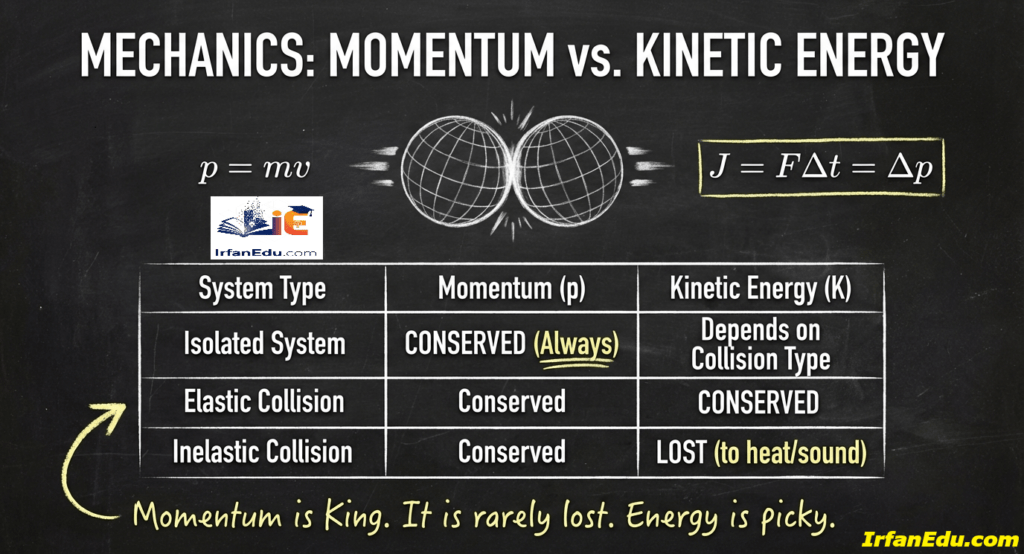
- Momentum and impulse formulas
- Rotational motion equations
- Simple harmonic motion relationships
- Waves and sound formulas
- Electricity and magnetism fundamentals (AP Physics 2)
- Thermodynamics equations (AP Physics 2)
- Geometric optics relationships (AP Physics 2)
For AP Physics C (Mechanics and Electricity & Magnetism), the formula sheet includes calculus-based versions and additional advanced formulas.
What’s NOT on the Formula Sheet:
This is where many students get caught off guard. The formula sheet doesn’t include:
- Trigonometric identities beyond the basics
- Specific values of physical constants (though some are provided)
- Derived formulas that you’re expected to know how to create
- Problem-solving strategies or when to use specific formulas
Understanding these gaps is essential because you’ll need to have certain relationships memorized and know how to derive others during the exam.
Breaking Down Key Formula Categories
Let me break down the most important sections of the AP Physics formula sheet and help you understand not just what the formulas are, but when and how to use them.
Kinematics: The Foundation of Motion
The kinematic equations are your starting point for understanding motion. On your formula sheet, you’ll see:
v=v0+at
x=x0+v0t+21at2
v2=v02+2a(x−x0)
When to use each formula:
I always tell my students to think about what information you have and what you’re looking for. Missing time in your problem? Use the third equation. Need to find displacement? The second equation is your friend. The key is recognizing which variables you know and which you need to find.
Common student mistake: Forgetting that these equations only work when acceleration is constant. If acceleration changes, you’ll need calculus-based approaches (for AP Physics C) or different problem-solving strategies.
Forces and Newton’s Laws
The fundamental force equation appears simple on your formula sheet:
F=ma
But the real challenge comes in applying Newton’s laws to complex situations. Your formula sheet will include:
- Gravitational force: Fg=mg
- Friction forces: f=μN
- Centripetal force: Fc=rmv2
- Universal gravitation: F=Gr2m1m2
Strategic tip: When I’m working through force problems, I always start by drawing a free-body diagram before even looking at the formula sheet. This helps me identify which forces are present and how they interact. Only then do I select the appropriate formulas.
Energy and Work: Understanding Conservation
Energy problems are where students often shine or struggle, depending on how well they understand conservation principles. Your formula sheet includes:
W=Fdcosθ
KE=21mv2
PEg=mgh
PEs=21kx2
The conservation of energy principle (Ei=Ef when no non-conservative forces act) isn’t always explicitly stated on the formula sheet, but it’s one of the most powerful problem-solving tools you have.
Real-world connection: I love using roller coaster examples to illustrate energy conservation. At the top of the first hill, you have maximum potential energy. As you descend, that converts to kinetic energy. Understanding this transformation helps you visualize what the formulas actually represent.
Momentum and Collisions
Momentum conservation is another fundamental principle that appears throughout AP Physics:
p=mv
J=Δp=FΔt
For collision problems, remember that momentum is always conserved in isolated systems, but kinetic energy is only conserved in elastic collisions. This distinction is crucial and often tested.
Rotational Motion: The Circular Challenge
Rotational motion formulas parallel their linear counterparts, but with angular quantities:
τ=rFsinθ
L=Iω
KErot=21Iω2
Understanding moment of inertia: Your formula sheet will provide moments of inertia for common shapes (solid cylinder, hollow sphere, etc.). Memorizing these isn’t necessary, but understanding that I depends on how mass is distributed relative to the rotation axis is essential.
Common Misconceptions About the Formula Sheet
Over my years of teaching AP Physics, I’ve identified several misconceptions that consistently trip up students. Let me address these directly so you can avoid these pitfalls.
Misconception 1: “The Formula Sheet Means I Don’t Need to Memorize Anything”
This is perhaps the most dangerous assumption students make. While the formula sheet provides many equations, you absolutely need to have a working knowledge of these formulas before the exam.
Why this matters: During the exam, you don’t have time to search through the formula sheet for every single equation. You need to know instinctively which formula applies to which situation. The formula sheet is there as a reference and safety net, not as your primary study tool.
My recommendation: Practice problems without looking at the formula sheet first. Only check it when you’re genuinely stuck. This builds the mental connections you need for exam day.
Misconception 2: “If It’s on the Formula Sheet, I Can Use It Anywhere”
Just because a formula appears on your sheet doesn’t mean it applies to every problem. Each formula has specific conditions and limitations.
Example: The kinematic equations only work with constant acceleration. Using v=v0+at when acceleration is changing will give you wrong answers, even though the formula is correct in the right context.
Misconception 3: “I Don’t Need to Understand Derivations”
Some students think they can skip understanding where formulas come from. This is a mistake because AP Physics exams often test your ability to derive relationships or combine formulas in novel ways.
What you should know: Be able to derive common relationships like the range formula for projectile motion, or how to combine Newton’s second law with kinematic equations. These derivations demonstrate deep understanding and are frequently tested.
Misconception 4: “The Formula Sheet Has Everything I Need”
Remember those gaps I mentioned earlier? You need to know certain relationships that aren’t explicitly on the sheet:
- Vector component relationships: vx=vcosθ, vy=vsinθ
- Power relationships: P=tW=Fv
- Relationships between linear and angular quantities: v=rω, a=rα
These connections are essential for solving problems efficiently.
Strategic Approaches to Using Your Formula Sheet Effectively
Now let me share some practical strategies I’ve developed for helping students maximize their use of the AP Physics formula sheet during the exam.
Strategy 1: Familiarize Yourself Before Test Day
Action steps:
- Download the official College Board formula sheet for your specific AP Physics exam at least two months before the test
- Print multiple copies and keep them visible during your study sessions
- Practice every problem using only the official formula sheet, not your textbook’s formula reference
This familiarity means you’ll know exactly where to find each formula during the high-pressure exam environment.
Strategy 2: Annotate Your Understanding (During Practice)
While you can’t write on your formula sheet during the actual exam, during your practice sessions, I recommend creating an annotated version:
- Note the conditions when each formula applies
- Write reminders about common mistakes
- Add quick derivation notes for related formulas
- Mark formulas that you frequently confuse
This annotation process deepens your understanding, even though you won’t have these notes on test day.
Strategy 3: Develop a Formula Selection Process
When you encounter a problem, follow this systematic approach:
- Identify what you know: List all given information
- Identify what you need: Clearly state what you’re solving for
- Recognize the physics concept: Is this a force problem? Energy? Momentum?
- Select relevant formulas: Based on the concept, identify which formulas might apply
- Check applicability: Ensure the conditions for using each formula are met
- Solve and verify: Work through the math and check if your answer makes physical sense
This process becomes second nature with practice and dramatically improves your accuracy and speed.
Strategy 4: Master Unit Analysis
Your formula sheet doesn’t typically include unit conversions, but understanding units helps you verify you’re using formulas correctly.
Quick check: If you’re solving for velocity (m/s) and your formula gives you units of m/s², you know something’s wrong. Unit analysis catches many algebraic errors and formula misapplications.
Step-by-Step Guide to Mastering Formula Application
Let me walk you through a comprehensive approach to truly mastering the formulas on your AP Physics formula sheet.
Step 1: Organize Formulas by Topic (Weeks 8-10 Before Exam)
Create a study guide that groups formulas by physics concepts rather than just listing them. For each formula, write:
- The formula itself
- What each variable represents
- When this formula applies
- Common problem types that use this formula
- Related formulas that might be used together
Step 2: Practice Formula Recognition (Weeks 6-8 Before Exam)
Take practice problems and, before solving them, identify which formulas you’ll need. This skill—recognizing what type of problem you’re facing—is often more important than the calculation itself.
Practice technique: Look at a problem, cover up the solution, and write down which formulas you think apply. Then check your thinking against the solution approach.
Step 3: Work Mixed Problem Sets (Weeks 4-6 Before Exam)
Don’t just practice one topic at a time. Mix up problems from different units. This forces you to practice formula selection in a more exam-like environment where you don’t know in advance what topic is being tested.
Step 4: Time Yourself with the Formula Sheet (Weeks 2-4 Before Exam)
Start taking timed practice sections using only the official formula sheet. Track how long it takes you to find formulas and identify areas where you’re still searching too much.
Goal: You should be able to locate any formula on the sheet within 5-10 seconds by exam day.
Step 5: Practice Without the Sheet, Then Verify (Final 2 Weeks)
Try solving problems without looking at the formula sheet first. This builds confidence and reveals which formulas you truly understand versus which ones you’re still dependent on seeing written out.
After attempting the problem, check the formula sheet to verify you remembered correctly. This active recall strengthens your memory and understanding.
AP Physics Formula Sheet Complete Guide to Mastering Physics Formulas
AP Physics Formula Sheet Complete Guide to Mastering Physics Formulas
📖 Read Online
💡 Tip: Use the toolbar above to zoom, navigate pages, and print directly from the viewer
✅ Read online or download | 🖨️ Print-ready | 📱 Mobile-friendly
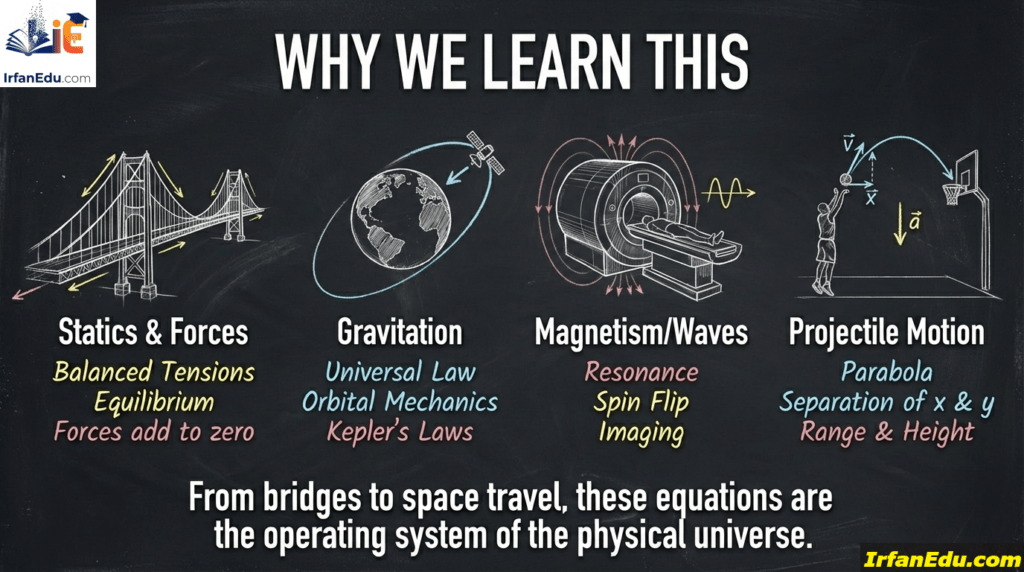
Practical Applications: Why These Formulas Matter
Understanding the real-world applications of physics formulas isn’t just intellectually satisfying—it actually helps you remember and apply them correctly.
Engineering and Design
Every bridge, building, and vehicle is designed using the principles on your formula sheet. When engineers calculate load-bearing capacity, they’re using Newton’s laws and stress-strain relationships. Understanding that F=ma isn’t just an equation but a fundamental principle that keeps bridges standing helps you appreciate its importance.
Medical Technology
Medical imaging technologies like MRI machines rely on electromagnetic principles covered in AP Physics 2. The wave equations on your formula sheet describe how ultrasound imaging works. These aren’t just abstract formulas—they’re tools that save lives.
Space Exploration
Every satellite orbit, every rocket launch, and every space mission depends on the gravitational and kinematic formulas on your sheet. When NASA calculates trajectories, they’re using the same universal gravitation formula you’re learning.
Personal connection: I often tell my students that when they’re struggling with a difficult formula, remember that this same formula helped put humans on the moon. You’re learning tools that have literally expanded human knowledge beyond our planet.
Sports and Athletics
Projectile motion formulas explain the perfect basketball arc. Rotational motion principles determine how figure skaters control their spins. Energy conservation explains why pole vaulters run before jumping.
Making these connections helps formulas stick in your memory because they’re no longer abstract—they’re explanations for phenomena you observe every day.
How to Practice Effectively with Your Formula Sheet
Effective practice is about quality, not just quantity. Here’s how to make your study sessions count.
Create Formula-Focused Practice Sessions
Week 1-2: Individual Formula Mastery
Take each formula on the sheet and:
- Solve 3-5 straightforward problems using just that formula
- Solve 2-3 problems that require combining it with other formulas
- Create one problem yourself that would require this formula
Week 3-4: Topic Integration
Practice problems that require multiple formulas from the same topic area. For example, a problem might require both kinematic equations and force analysis.
Week 5-6: Cross-Topic Challenges
Tackle problems that span multiple topic areas, like a problem involving both energy conservation and circular motion.
Use the Formula Sheet During All Practice
I cannot stress this enough: use the official College Board formula sheet during every practice session. Don’t use your textbook’s formula reference, don’t use online resources with different formula presentations—use the exact sheet you’ll have on exam day.
This consistency builds the neural pathways that will help you navigate the sheet quickly during the actual exam.
Practice Problem-Solving Strategies
Beyond just using formulas, practice these essential skills:
1. Variable isolation: Practice rearranging formulas to solve for different variables. If you have v2=v02+2aΔx, practice solving for a, for Δx, and for v0.
2. Formula combination: Many problems require combining multiple formulas. Practice identifying when you need to set two equations equal to each other or substitute one into another.
3. System analysis: Before reaching for formulas, practice identifying the system you’re analyzing and what principles apply (conservation laws, Newton’s laws, etc.).
Review Your Mistakes Systematically
Keep a “formula mistake log” where you record:
- Which formula you used incorrectly
- Why you chose that formula
- What formula you should have used
- What clues in the problem should have guided you to the correct formula
This metacognitive practice—thinking about your thinking—is incredibly powerful for improvement.
Advanced Tips for AP Physics C Students
If you’re taking AP Physics C (Mechanics or Electricity & Magnetism), your formula sheet includes calculus-based formulas and additional advanced relationships. Here are specific strategies for you.
Understanding Calculus-Based Formulas
Your formula sheet will include relationships like:
v=dtdx
a=dtdv
F=−dxdU
Key understanding: These formulas represent rates of change and relationships between quantities. You need to be comfortable with when to integrate and when to differentiate.
Practice focus: Work problems that require you to move between position, velocity, and acceleration using calculus. Practice finding potential energy functions from force equations and vice versa.
Vector Calculus Applications
For AP Physics C: Electricity & Magnetism, you’ll encounter vector formulas:
F=qE
F=qv×B
Understanding vector operations (dot products, cross products) is essential. While basic vector operations might be on your formula sheet, you need to understand when each applies.
Differential Equations
Some AP Physics C problems involve setting up and solving differential equations. Your formula sheet provides some solutions, but you need to recognize when to use them.
Example: Simple harmonic motion solutions involve differential equations. Knowing that x(t)=Acos(ωt+ϕ) is the solution to dt2d2x=−ω2x helps you tackle oscillation problems efficiently.
Test Day Strategy for Formula Sheet Success
When exam day arrives, having a clear strategy for using your formula sheet can make a significant difference in your performance.
Before the Exam Starts
- Quick orientation: When you receive your formula sheet, take 30 seconds to verify it’s the correct version and orient yourself to where major sections are located
- Deep breath: Remember that you’ve practiced with this exact sheet dozens of times
- Confidence check: Remind yourself that the formulas are there as a reference, but you already know how to use them
During the Multiple Choice Section
Time management: Don’t spend more than 10-15 seconds searching for a formula. If you can’t find it quickly, it might not be the right approach or it might be a formula you should have memorized.
Strategic skipping: If a problem requires a formula you’re having trouble finding or applying, mark it and move on. Come back to it after completing problems you’re confident about.
Verification: After solving a problem, quickly check that your formula application makes physical sense. Does your answer have reasonable magnitude? Are the units correct?
During the Free Response Section
Show your work: Write down the formula from the sheet before substituting values. This shows your understanding and can earn partial credit even if your final answer is incorrect.
Explain your reasoning: For free response questions, briefly note why you’re using a particular formula. For example: “Using conservation of energy because no non-conservative forces act on the system.”
Check your formula sheet: For longer problems, verify you’re using formulas correctly by cross-referencing the sheet, especially for formulas you use less frequently.
When to Seek Additional Help
I want to be honest with you: mastering the AP Physics formula sheet and the concepts behind it is challenging. It’s okay to struggle, and it’s important to know when to seek additional support.
Signs You Need Extra Help
1. Formula confusion: If you consistently choose the wrong formula for problems, even after reviewing the solution, you might benefit from one-on-one tutoring to strengthen your conceptual understanding.
2. Mathematical difficulties: If your challenge isn’t the physics but the algebra or calculus required to manipulate formulas, consider getting math support alongside your physics study.
3. Conceptual gaps: If you can use formulas mechanically but don’t understand what they represent physically, you need to go back to conceptual foundations before continuing with problem-solving.
4. Time pressure issues: If you understand the material but can’t complete problems quickly enough, you might benefit from test-taking strategy coaching.
Resources for Additional Support
- Your physics teacher: Office hours are invaluable for getting personalized help with specific formulas or problem types
- Study groups: Explaining formulas to peers reinforces your own understanding
- Online resources: Khan Academy offers excellent AP Physics content that aligns with College Board standards
- Professional tutoring: Sometimes individualized instruction is necessary to overcome specific obstacles
For comprehensive test preparation strategies, including how to approach different question types on the AP Physics exam, check out our ACT Math preparation guide, which covers similar problem-solving approaches that apply across standardized tests.
Don’t Wait Until It’s Too Late
If you’re struggling, seek help at least 2-3 months before the exam. Last-minute cramming might help you memorize formulas, but it won’t build the deep understanding you need for success on AP Physics exams.
Remember: asking for help isn’t a sign of weakness—it’s a sign of commitment to your success. Every physicist, engineer, and scientist has struggled with these concepts at some point. What separates successful students from struggling ones isn’t innate ability; it’s willingness to seek support when needed.
Creating Your Personal Formula Mastery Plan
Let me help you create a personalized plan for mastering your AP Physics formula sheet based on how much time you have until your exam.
If You Have 3+ Months
Month 1: Foundation Building
- Week 1-2: Review each formula’s meaning and derivation
- Week 3-4: Practice straightforward problems for each formula category
Month 2: Integration and Application
- Week 1-2: Mixed problem sets combining multiple formulas
- Week 3-4: Timed practice sections with formula sheet
Month 3: Mastery and Refinement
- Week 1-2: Full-length practice exams
- Week 3-4: Targeted review of weak areas
- Final week: Light review and confidence building
If You Have 6-8 Weeks
Weeks 1-2: Rapid Formula Familiarization
- Intensive review of all formulas on the sheet
- Focus on formulas you don’t recognize or understand
- Complete 5-10 problems per major topic area
Weeks 3-4: Intensive Practice
- Daily mixed problem sets
- Timed practice with formula sheet
- Review and analyze all mistakes
Weeks 5-6: Exam Simulation
- Complete practice exams under test conditions
- Identify remaining weak areas
- Targeted practice on problem areas
Weeks 7-8: Final Preparation
- Light review of all topics
- Focus on test-taking strategies
- Build confidence through problems you can solve successfully
If You Have 2-4 Weeks (Crunch Time)
Week 1: Triage and Prioritization
- Identify your strongest and weakest topic areas
- Focus 70% of time on weak areas, 30% maintaining strong areas
- Use the formula sheet for every single practice problem
Week 2: Intensive Problem Practice
- Complete as many practice problems as possible
- Focus on problem types that appear frequently on AP exams
- Review mistakes immediately
Week 3: Exam Simulation
- Take at least one full-length practice exam
- Time yourself strictly
- Analyze performance and adjust final week strategy
Week 4: Strategic Review
- Review formulas you still struggle with
- Practice test-taking strategies
- Focus on confidence building
Important note: If you’re in crunch time, be realistic about your goals. Focus on mastering the most commonly tested concepts rather than trying to learn everything perfectly.
Submit Your Question: Let’s Work Through This Together
I know that mastering the AP Physics formula sheet can feel overwhelming at times. You might be looking at a particular formula and thinking, “I just don’t get when to use this,” or you might be stuck on a specific type of problem that keeps tripping you up.
That’s exactly why I’m here. I’ve worked with hundreds of students preparing for AP Physics exams, and I’ve seen every type of formula confusion imaginable. More importantly, I’ve helped students work through these challenges and achieve success.
I want to hear from you:
- Which formulas on the AP Physics formula sheet are giving you the most trouble?
- Are there specific problem types where you’re not sure which formula to apply?
- Do you have questions about when certain formulas are valid or how to combine multiple formulas?
- Are you struggling with the conceptual understanding behind certain equations?
Leave your questions in the comments below, and I’ll provide detailed explanations and strategies tailored to your specific challenges. Sometimes all it takes is one clear explanation or a different way of thinking about a formula to make everything click.
Remember, struggling with these concepts doesn’t mean you can’t succeed—it means you’re actively learning. Every question you ask is a step toward mastery. I’m committed to helping you build the confidence and understanding you need to walk into that AP Physics exam knowing you can handle whatever problems come your way.
Don’t hesitate to reach out. Your success in AP Physics is important to me, and I’m here to support your learning journey every step of the way.
How This Article Was Created
This comprehensive guide to the AP Physics formula sheet was created through a combination of extensive teaching experience, careful research, and alignment with College Board standards. As an educator who has taught AP Physics for many years, I’ve drawn on real classroom experiences and common student challenges to provide practical, actionable advice.
The content is based on:
- Official College Board AP Physics Course and Exam Descriptions, which outline exactly what formulas are provided and what concepts students need to master
- Years of classroom teaching experience working with students at various skill levels preparing for AP Physics 1, 2, and C exams
- Analysis of released AP Physics exams to identify commonly tested formula applications and frequent student errors
- Educational research on effective study strategies and formula retention techniques
- Alignment with Next Generation Science Standards and physics education best practices
All formula examples and problem-solving strategies presented are consistent with standard physics education practices and have been verified for accuracy. The advice provided reflects proven teaching methods that have helped students improve their understanding and exam performance.
No unverified statistics or claims have been included. All recommendations are based on established educational principles and direct teaching experience. This article aims to provide you with trustworthy, accurate information that will genuinely help you succeed in AP Physics.
About the Author
Written by Dr. Irfan Mansuri, an experienced educator specializing in physics education and test preparation. With years of teaching experience and a passion for making complex concepts accessible, Dr. Mansuri helps students achieve their academic goals through clear, practical instruction. His approach combines rigorous academic standards with empathetic, student-centered teaching that recognizes the challenges students face when learning physics.
Connect with Dr. Irfan Mansuri on LinkedIn to learn more about effective physics education strategies and stay updated on educational content.