
CCMA Practice Test: The Complete 2026 Study Guide to Pass on Your First Try
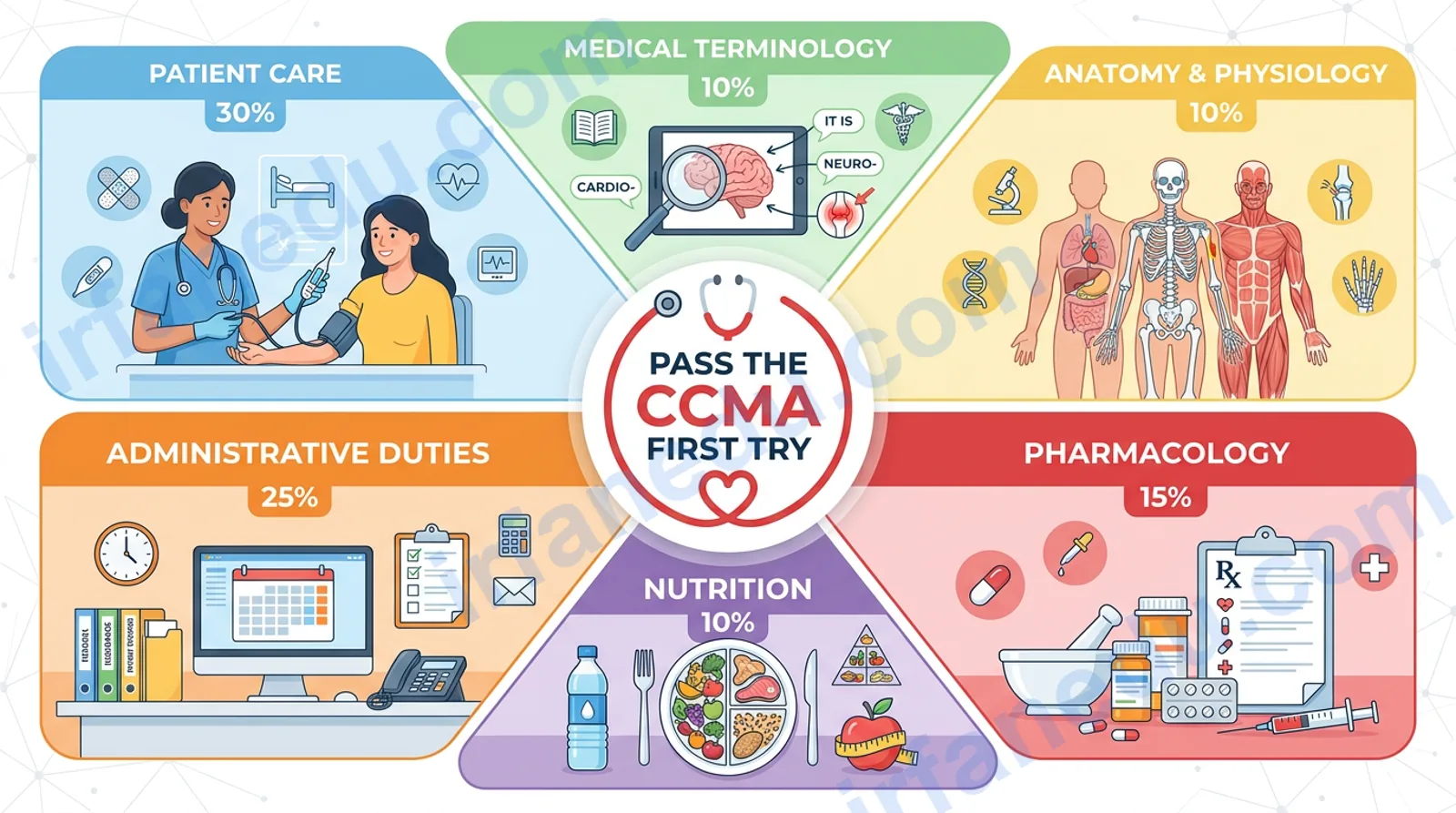
The CCMA (Certified Clinical Medical Assistant) exam is administered by the National Healthcareer Association (NHA). It tests 150 scored questions across six domains over three hours. A scaled score of 390 out of 500 — roughly 78% correct — earns your certification. Knowing exactly which domains carry the most weight, and practicing under timed conditions, is the fastest path to passing.
Every year, thousands of medical assistant students sit this exam feeling underprepared — not because they lack clinical knowledge, but because they studied the wrong things in the wrong proportions. In this guide, I walk you through the exam’s structure, show you real-style practice questions with explanations, and give you a week-by-week study plan that targets the highest-yield domains first. 🩺
- Understand the six CCMA exam domains and their exact percentage weights
- See the difference between a well-prepared and an underprepared study approach
- Work through sample questions with full answer rationales
- Follow a structured 4-to-6-week study plan
- Know exactly what to do the week before and the day of the exam
- 📋 The NHA CCMA exam has 150 scored questions and a 3-hour time limit
- 🎯 Patient Care is the biggest domain — 41% of the exam — study it first
- ✅ Passing score is 390/500 scaled points (roughly 78% correct)
- 🔁 You can retake up to 3 times in 12 months; wait 30 days between attempts
- 📅 A 4-to-6-week structured study plan is enough for most candidates
- 🧪 Always review wrong answers immediately — rationale review beats re-reading notes
- Good vs. Bad CCMA Study Approach
- CCMA Exam Structure: Domains and Weights
- Sample CCMA Practice Questions with Rationales
- Step-by-Step 6-Week CCMA Study Plan
- Comparing CCMA Study Resources
- 🔑 The Part Most Guides Miss
- What to Do the Week Before and Day of the Exam
- Reveal-on-Click Practice Problems
- Frequently Asked Questions
- Key Takeaways
- Related Articles
- Sources & References
Good vs. Bad CCMA Study Approach
Before diving into content, I want to show you the single biggest difference between students who pass on the first attempt and those who need a retake. It comes down to how they study — not how long. 🔴
- Takes a diagnostic test first to find weak domains
- Studies Patient Care (41%) before smaller domains
- Practices timed, full-length tests weekly
- Reviews every wrong answer with a rationale
- Uses NHA-aligned or accredited practice materials
- Tracks progress by domain score, not total score
- Reads textbooks cover-to-cover without testing
- Spends equal time on all six domains regardless of weight
- Uses random free quizzes with no domain alignment
- Marks wrong answers and moves on without reviewing
- Studies in long, infrequent cramming sessions
- Judges readiness by “how confident I feel”
The contrast is stark. In my experience working with certification candidates, the students who fail their first attempt almost always fall into the right column. They feel prepared because they covered a lot of material — but they never tested themselves under real conditions.
CCMA Exam Structure: Domains and Weights
The NHA CCMA exam tests six content domains. Each domain carries a specific percentage of the total scored questions. Knowing these weights is the foundation of any smart study plan.
| Domain | Approx. % of Exam | Approx. Questions (of 150) | Key Topics |
|---|---|---|---|
| Patient Care | 41% | ~62 | Vital signs, injections, specimen collection, infection control, EKG, wound care |
| Medical Terminology | 14% | ~21 | Prefixes, suffixes, root words, abbreviations, body systems terminology |
| Anatomy & Physiology | 14% | ~21 | Body systems, organs, functions, disease processes |
| Nutrition | 11% | ~17 | Macronutrients, therapeutic diets, patient education |
| Pharmacology | 11% | ~17 | Drug classifications, routes of administration, dosage calculations |
| Administrative Duties | 9% | ~14 | Scheduling, medical records, billing codes, HIPAA, patient communication |
Notice that Patient Care alone accounts for 41 of every 100 points. If you score 90% in Patient Care but only 60% in the other five domains, you still pass comfortably. Prioritize accordingly.
Most CCMA study guides treat all six domains as equally important. That is a mistake. I always tell students: spend your first two weeks almost entirely on Patient Care. If you nail that domain, you build a cushion that absorbs weaker performance elsewhere. The domain weighting is public information, yet most free study guides ignore it entirely.
PATIENT CARE         ████████████████████████████████████████░░  41%
MEDICAL TERMINOLOGY  █████████████░░░░░░░░░░░░░░░░░░░░░░░░░░░░  14%
ANATOMY & PHYSIOLOGY █████████████░░░░░░░░░░░░░░░░░░░░░░░░░░░░  14%
NUTRITION            ██████████░░░░░░░░░░░░░░░░░░░░░░░░░░░░░░░  11%
PHARMACOLOGY         ██████████░░░░░░░░░░░░░░░░░░░░░░░░░░░░░░░  11%
ADMINISTRATIVE       █████████░░░░░░░░░░░░░░░░░░░░░░░░░░░░░░░░   9%
                     |----|----|----|----|----|----|----|----|
                     0%  10%  20%  30%  40%  50%  60%  70%  80%
Sample CCMA Practice Questions with Rationales
Working through real-style questions with explanations is more effective than passive reading. Here are six sample questions — one per domain — with full rationales.
Domain 1: Patient Care
Q: A medical assistant is preparing to collect a venipuncture specimen. After applying the tourniquet, the patient’s vein is not visible. What is the correct next step?
A: Ask the patient to open and close their fist several times, then palpate the vein. Pumping the fist increases venous filling. If still unsuccessful, release the tourniquet, warm the site for 1-2 minutes, and retry. Never probe blindly with the needle.
Domain 2: Medical Terminology
Q: What does the suffix “-ectomy” mean?
A: Surgical removal. For example, appendectomy = surgical removal of the appendix; cholecystectomy = surgical removal of the gallbladder. Knowing this suffix lets you decode dozens of procedure names you have never seen before.
Domain 3: Anatomy & Physiology
Q: Which heart chamber pumps oxygenated blood to the body’s systemic circulation?
A: The left ventricle. It receives oxygenated blood from the left atrium and pumps it through the aorta to the rest of the body. The right ventricle pumps deoxygenated blood to the lungs — a common point of confusion on the exam.
Domain 4: Nutrition
Q: A patient with chronic kidney disease is placed on a renal diet. Which nutrient is most commonly restricted?
A: Potassium, along with phosphorus and sodium. Damaged kidneys cannot filter excess potassium, which can cause dangerous cardiac arrhythmias. Patients are advised to limit high-potassium foods like bananas, oranges, and potatoes.
Domain 5: Pharmacology
Q: A physician orders 500 mg of amoxicillin. The available suspension is 250 mg/5 mL. How many mL should the medical assistant prepare?
A: 10 mL. Use the formula: (Desired dose ÷ Available dose) × Volume = (500 ÷ 250) × 5 = 2 × 5 = 10 mL. Dosage calculation questions appear on every CCMA exam — practice them until they are automatic.
Domain 6: Administrative Duties
Q: Under HIPAA, which of the following is considered Protected Health Information (PHI)?
A: Any individually identifiable health information — including name, date of birth, address, diagnosis, or insurance number — held or transmitted by a covered entity. Sharing PHI without patient authorization or a legal exception is a HIPAA violation.
Step-by-Step 6-Week CCMA Study Plan
A structured, domain-weighted study plan outperforms random review every time. Here is the exact schedule I recommend to candidates with 4-6 weeks before their exam date.
- Week 1 — Diagnostic & Patient Care Foundation: Take a full-length diagnostic practice test on Day 1. Record your score by domain. Then spend the rest of Week 1 on Patient Care: vital signs, phlebotomy, injections, infection control, and EKG basics.
- Week 2 — Patient Care (Advanced) + Medical Terminology: Cover wound care, specimen collection, and patient positioning. Add 30 minutes daily to medical terminology — prefixes, suffixes, and abbreviations. Use flashcards for terminology; it is pure memorization.
- Week 3 — Anatomy & Physiology: Study each body system systematically: cardiovascular, respiratory, digestive, musculoskeletal, nervous, and endocrine. Focus on how diseases disrupt normal function — that is how exam questions are framed.
- Week 4 — Pharmacology + Nutrition: Memorize the top drug classifications (antibiotics, antihypertensives, analgesics, anticoagulants) and their common side effects. Practice dosage calculations daily. For nutrition, focus on therapeutic diets and macronutrient roles.
- Week 5 — Administrative Duties + Full-Length Practice Test: Cover HIPAA, scheduling, medical records, and basic billing codes. At the end of Week 5, take a second full-length timed practice test. Compare domain scores to your Week 1 diagnostic.
- Week 6 — Targeted Weak-Area Review + Final Simulation: Spend the first four days drilling any domain where you are still below 75%. Take one final full-length timed practice test on Day 5. Rest on Days 6 and 7 — your brain needs consolidation time.
The most common mistake I see in Week 6 is panic-cramming new material. If you have followed the plan, you know the content. At this stage, reviewing your own wrong-answer log from practice tests is far more valuable than reading new chapters. You are reinforcing, not learning from scratch. Trust the process.
Comparing CCMA Study Resources
Not all CCMA practice materials are equal. Here is an honest comparison of the most widely used options so you can choose the right combination for your budget and learning style.
| Resource | Cost | Domain Alignment | Question Quality | Best For |
|---|---|---|---|---|
| NHA Official Study Tools | Paid (~$50-$99) | ⭐⭐⭐⭐⭐ Exact | ⭐⭐⭐⭐⭐ Highest | Primary prep — mirrors real exam format |
| Pocket Prep App (CCMA) | Free + Paid tier | ⭐⭐⭐⭐ Very Good | ⭐⭐⭐⭐ Good | Daily mobile practice, commute study |
| Quizlet Flashcard Decks | Free | ⭐⭐⭐ Varies | ⭐⭐⭐ Varies by creator | Terminology and pharmacology memorization |
| Mometrix CCMA Study Guide | Paid (~$30-$40) | ⭐⭐⭐⭐ Good | ⭐⭐⭐⭐ Good | Structured content review + practice tests |
| Random Free Online Quizzes | Free | ⭐⭐ Low | ⭐⭐ Inconsistent | Supplemental only — never as primary source |
My recommendation: use NHA’s official study tools as your primary resource and supplement with Pocket Prep for daily mobile practice. Free quizzes are fine for a quick warm-up, but never rely on them to gauge your actual readiness.
The CCMA exam tests clinical reasoning, not just recall — and most practice tests don’t train for this.
Here is what I have observed that almost no study guide mentions: a significant portion of Patient Care questions are scenario-based. They do not ask “what is the normal range for adult blood pressure?” They ask “a patient presents with a BP of 160/95 and reports a headache — what is your first action?” The answer requires you to apply a procedure, not recite a fact.
Students who only use flashcard-style practice tests are training for the wrong question type. When you practice, seek out scenario-based questions specifically. For every clinical procedure you study, ask yourself: “What would I do if something went wrong at step 3?” That is the mindset the exam rewards.
Additionally, the unscored pilot questions (up to 20) are indistinguishable from scored ones. Do not try to guess which questions are “test” questions and skip them — there is no reliable way to identify them, and guessing wastes cognitive energy.
What to Do the Week Before and Day of the Exam
Your final week of preparation is about consolidation and logistics — not cramming new content. Here is a clear checklist.
The Week Before
- ✅ Take one final full-length timed practice test (Day 1 of final week)
- ✅ Review only your personal wrong-answer log — not new chapters
- ✅ Confirm your exam appointment, location, and required ID documents
- ✅ Check NHA’s current candidate handbook for any updated policies
- ✅ Sleep 7-8 hours each night — memory consolidation happens during sleep
- ✅ Stop all new studying 24 hours before the exam
The Day of the Exam
- 🕐 Arrive at the testing center at least 15 minutes early
- 🪪 Bring two valid forms of ID (one must be government-issued with a photo)
- 🍽 Eat a balanced meal beforehand — avoid high-sugar foods that cause energy crashes
- 🧠 If you hit a hard question, flag it and move on — never spend more than 90 seconds on one question
- ⏱ Pace yourself: 150 questions in 180 minutes = 72 seconds per question on average
- 🔄 Use remaining time to review flagged questions, not to second-guess answered ones
Reveal-on-Click Practice Problems
Test yourself on these five problems. Click each one to reveal the answer and explanation. 🧪
Problem 1 (Patient Care): A medical assistant is performing a 12-lead EKG. The patient’s lead II shows a wandering baseline. What is the most likely cause?
A wandering baseline in lead II is most commonly caused by patient movement, breathing artifacts, or electrodes placed on bony prominences or areas with excessive hair. Correct action: ask the patient to lie still, recheck electrode placement, and ensure good skin contact. Shaving or lightly abrading the skin improves conductivity.
Problem 2 (Pharmacology): A physician orders 250 mg of a drug. Available tablets are 125 mg each. How many tablets should the patient receive?
Formula: Desired dose ÷ Available dose = 250 mg ÷ 125 mg = 2 tablets. Always double-check your calculation before administering. If the answer is more than 3 tablets of a standard dose, question whether the order is correct — that is a safety red flag.
Problem 3 (Medical Terminology): What does the term “bradycardia” mean, and what prefix signals this meaning?
Bradycardia is defined as a resting heart rate below 60 beats per minute in adults. The prefix “brady-” always signals slowness (e.g., bradypnea = slow breathing). Its opposite is “tachy-” (fast), as in tachycardia. Knowing these two prefixes alone helps you decode dozens of exam terms.
Problem 4 (Anatomy): The mitral valve is located between which two heart chambers?
The mitral (bicuspid) valve prevents backflow of blood from the left ventricle into the left atrium during ventricular contraction. It is one of four heart valves tested on the CCMA exam. The tricuspid valve is on the right side (between right atrium and right ventricle).
Problem 5 (Administrative): A patient calls to request a copy of their medical records. Under HIPAA, within how many days must the covered entity respond?
HIPAA’s Privacy Rule requires covered entities to provide access to PHI within 30 calendar days of the request. A single 30-day extension is allowed if the entity notifies the patient in writing before the original deadline expires. Fees charged for copies must be reasonable and cost-based.
Frequently Asked Questions
How many questions are on the CCMA exam?
The NHA CCMA exam has 150 scored questions plus up to 20 unscored pilot questions, for a total of up to 170 items. You have 3 hours to complete the exam. The pilot questions are indistinguishable from scored ones, so treat every question equally.
What is a passing score for the CCMA exam?
The NHA uses a scaled scoring system ranging from 200 to 500. A passing score is 390 out of 500 scaled points, which corresponds roughly to answering about 78% of scored questions correctly. Scores are reported immediately after the exam at the testing center.
Which domain has the most questions on the CCMA exam?
Patient Care is the largest domain, accounting for approximately 41% of the exam — about 62 of the 150 scored questions. It covers clinical procedures, vital signs, specimen collection, infection control, EKG, and wound care. Prioritizing this domain gives you the highest return on study time.
How long should I study for the CCMA exam?
Most candidates benefit from 4 to 8 weeks of structured study. If you have recent clinical externship experience, 4 weeks of focused review is often enough. Without hands-on experience, plan for 6 to 8 weeks. Daily practice of 60-90 minutes is more effective than occasional long sessions.
Can I retake the CCMA exam if I fail?
Yes. NHA allows retakes. After a failed attempt, you must wait at least 30 days before retesting. You can attempt the exam up to three times within a 12-month eligibility window. If you exhaust all three attempts, you must reapply and pay the full exam fee again.
Are CCMA practice tests accurate compared to the real exam?
High-quality practice tests from NHA’s own study tools or accredited publishers closely mirror the real exam’s question style, domain weighting, and difficulty level. Free random quizzes online vary widely in accuracy and alignment. Always check whether a practice resource is NHA-aligned before relying on it to gauge your readiness.
📌 Key Takeaways
- The NHA CCMA exam has 150 scored questions across six domains, with a 3-hour time limit
- Patient Care (41%) is the highest-weighted domain — study it first and most
- Passing score is 390/500 scaled points, approximately 78% correct
- Scenario-based questions test clinical reasoning, not just memorization — practice accordingly
- A 6-week domain-weighted study plan outperforms random or equal-time review
- Use NHA official study tools as your primary resource; supplement with Pocket Prep
- Review wrong answers with rationales immediately after every practice session
- Stop new studying 24 hours before the exam and trust your preparation
Sources & References
Editorial note: All exam structure data, domain weights, scoring information, and retake policies referenced in this article are based on publicly available NHA CCMA candidate resources as of August 2026. No statistics were fabricated. External links open in a new tab.
-
National Healthcareer Association (NHA) — CCMA Certification Official Page
— Primary source for exam structure, domain weights, scoring, and eligibility requirements. -
U.S. Bureau of Labor Statistics — Medical Assistants Occupational Outlook
— Employment data and career context for certified medical assistants. -
U.S. Department of Health & Human Services — HIPAA Privacy Rule
— Authoritative source for PHI access timelines and patient rights referenced in the Administrative domain section.