
NCLEX Drug Guide: Cardiac, Blood, Endocrine and Pain Medications
On this page
How to read a drug for the exam
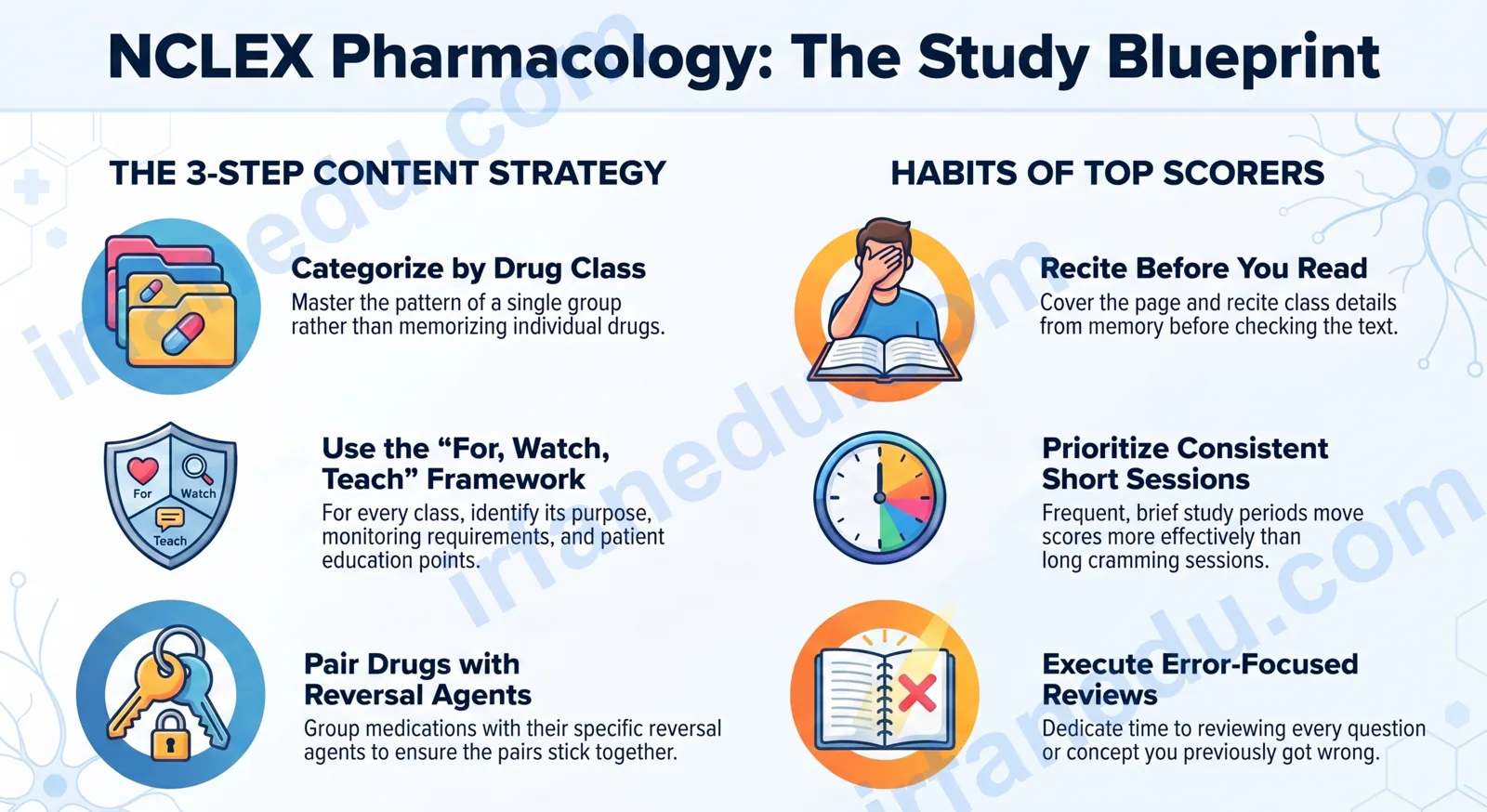
Almost nobody fails pharmacology items for not knowing what a drug is for. They fail on the nursing column — the parameter you check before you give it, the number that makes you hold it, and the finding that means stop and call. Learn drugs in that order and a class you have never seen becomes answerable from its family resemblance.
Where a drug has an antidote, learn the pair as a pair. Reversal agents are cheap marks and they come up in emergency items where you have no time to reason from first principles.
All 28 drugs at a glance
| Drug | Class | Used for |
|---|---|---|
| Digoxin | Cardiac glycoside | Heart failure, atrial fibrillation rate control |
| Furosemide | Loop diuretic | Pulmonary oedema, heart failure, oedema |
| Spironolactone | Potassium-sparing diuretic | Heart failure, ascites, hyperaldosteronism |
| Metoprolol | Beta-1 selective blocker | Hypertension, angina, post-myocardial infarction, heart failure |
| Lisinopril | ACE inhibitor | Hypertension, heart failure, renal protection in diabetes |
| Losartan | Angiotensin II receptor blocker | Hypertension when an ACE inhibitor causes cough |
| Amlodipine | Calcium channel blocker (dihydropyridine) | Hypertension, angina |
| Nitroglycerin | Nitrate vasodilator | Angina, acute coronary syndrome |
| Atorvastatin | HMG-CoA reductase inhibitor | Hyperlipidaemia, cardiovascular risk reduction |
| Amiodarone | Class III antidysrhythmic | Ventricular and atrial dysrhythmias |
| Adenosine | Antidysrhythmic | Terminating supraventricular tachycardia |
| Heparin | Anticoagulant | Venous thromboembolism, acute coronary syndrome, dialysis circuits |
| Enoxaparin | Low molecular weight heparin | Deep vein thrombosis prevention and treatment |
| Warfarin | Vitamin K antagonist | Atrial fibrillation, mechanical valves, recurrent thromboembolism |
| Clopidogrel | Antiplatelet | Post-stent, stroke and myocardial infarction prevention |
| Alteplase | Thrombolytic | Ischaemic stroke, massive pulmonary embolism, myocardial infarction |
| Regular insulin | Short-acting insulin | Hyperglycaemia, diabetic ketoacidosis (IV) |
| Insulin glargine | Long-acting insulin | Basal glycaemic control |
| Metformin | Biguanide | Type 2 diabetes |
| Levothyroxine | Thyroid hormone | Hypothyroidism |
| Propylthiouracil | Antithyroid agent | Hyperthyroidism, thyroid storm |
| Prednisone | Corticosteroid | Inflammation, autoimmune disease, transplant, asthma exacerbation |
| Desmopressin | Vasopressin analogue | Diabetes insipidus, nocturnal enuresis |
| Morphine | Opioid agonist | Severe pain, myocardial infarction, pulmonary oedema |
| Hydromorphone | Opioid agonist | Severe pain |
| Acetaminophen | Non-opioid analgesic and antipyretic | Mild to moderate pain, fever |
| Ibuprofen | NSAID | Pain, inflammation, fever |
| Naloxone | Opioid antagonist | Opioid-induced respiratory depression |
Drug by drug
Digoxin
Cardiac glycoside
Used for. Heart failure, atrial fibrillation rate control
Adverse effects. Bradycardia, nausea, anorexia, yellow-green or halo vision, dysrhythmias
Nursing considerations. Count apical pulse for a full minute and hold if under 60 in an adult. Low potassium potentiates toxicity, so check the level before giving.
Furosemide
Loop diuretic
Used for. Pulmonary oedema, heart failure, oedema
Adverse effects. Hypokalaemia, hypotension, ototoxicity, dehydration
Nursing considerations. Give IV push slowly, weigh daily, monitor potassium and hearing. Dose in the morning to protect sleep.
Spironolactone
Potassium-sparing diuretic
Used for. Heart failure, ascites, hyperaldosteronism
Adverse effects. Hyperkalaemia, gynaecomastia, menstrual irregularity
Nursing considerations. Teach the client to avoid salt substitutes, which are potassium chloride.
Metoprolol
Beta-1 selective blocker
Used for. Hypertension, angina, post-myocardial infarction, heart failure
Adverse effects. Bradycardia, fatigue, hypotension, masked hypoglycaemia signs
Nursing considerations. Hold for a heart rate under 60 or systolic under 100. Never stop abruptly, as rebound angina can follow.
Lisinopril
ACE inhibitor
Used for. Hypertension, heart failure, renal protection in diabetes
Adverse effects. Dry persistent cough, hyperkalaemia, angioedema, first-dose hypotension
Nursing considerations. Angioedema is an emergency and means the drug is stopped permanently. Contraindicated in pregnancy.
Losartan
Angiotensin II receptor blocker
Used for. Hypertension when an ACE inhibitor causes cough
Adverse effects. Hyperkalaemia, dizziness
Nursing considerations. Same pregnancy contraindication as ACE inhibitors, but far less cough.
Amlodipine
Calcium channel blocker (dihydropyridine)
Used for. Hypertension, angina
Adverse effects. Peripheral oedema, headache, flushing, reflex tachycardia
Nursing considerations. Teach the client to avoid grapefruit juice and to rise slowly.
Nitroglycerin
Nitrate vasodilator
Used for. Angina, acute coronary syndrome
Adverse effects. Headache, hypotension, dizziness
Nursing considerations. Sublingual every five minutes up to three doses; call emergency services if pain persists after the first dose. Never combine with erectile dysfunction drugs.
Atorvastatin
HMG-CoA reductase inhibitor
Used for. Hyperlipidaemia, cardiovascular risk reduction
Adverse effects. Myalgia, rhabdomyolysis, raised liver enzymes
Nursing considerations. Report unexplained muscle pain with dark urine at once. Monitor liver function.
Amiodarone
Class III antidysrhythmic
Used for. Ventricular and atrial dysrhythmias
Adverse effects. Pulmonary fibrosis, thyroid dysfunction, corneal deposits, blue-grey skin, bradycardia
Nursing considerations. Baseline and periodic chest imaging, thyroid and liver studies. Use a filter for IV infusion.
Adenosine
Antidysrhythmic
Used for. Terminating supraventricular tachycardia
Adverse effects. Brief asystole, flushing, chest tightness
Nursing considerations. Rapid IV push over 1 – 2 seconds into a proximal site followed by a fast saline flush. Warn the client about a few seconds of chest discomfort.
Heparin
Anticoagulant
Used for. Venous thromboembolism, acute coronary syndrome, dialysis circuits
Adverse effects. Bleeding, heparin-induced thrombocytopenia
Nursing considerations. Follow aPTT with a therapeutic range of 1.5 – 2.5 times control. Watch the platelet count. Do not aspirate or massage subcutaneous injections.
Enoxaparin
Low molecular weight heparin
Used for. Deep vein thrombosis prevention and treatment
Adverse effects. Bleeding, injection site haematoma
Nursing considerations. Give deep subcutaneously in the abdomen and do not expel the air bubble in the prefilled syringe. Routine aPTT monitoring is not required.
Warfarin
Vitamin K antagonist
Used for. Atrial fibrillation, mechanical valves, recurrent thromboembolism
Adverse effects. Bleeding, purple toe syndrome
Nursing considerations. Follow the INR. Teach a consistent, not zero, vitamin K intake. Many drug interactions.
Clopidogrel
Antiplatelet
Used for. Post-stent, stroke and myocardial infarction prevention
Adverse effects. Bleeding, bruising
Nursing considerations. Hold before surgery as directed and teach the client to report black stools.
Alteplase
Thrombolytic
Used for. Ischaemic stroke, massive pulmonary embolism, myocardial infarction
Adverse effects. Major haemorrhage, intracranial bleeding
Nursing considerations. Screen the bleeding-risk exclusions carefully and confirm the symptom onset time before giving.
Regular insulin
Short-acting insulin
Used for. Hyperglycaemia, diabetic ketoacidosis (IV)
Adverse effects. Hypoglycaemia, hypokalaemia
Nursing considerations. The only insulin given IV. Onset around 30 minutes, peak 2 – 4 hours. When mixing, draw clear before cloudy.
Insulin glargine
Long-acting insulin
Used for. Basal glycaemic control
Adverse effects. Hypoglycaemia, injection site changes
Nursing considerations. No pronounced peak, so it is never mixed with another insulin in the same syringe.
Metformin
Biguanide
Used for. Type 2 diabetes
Adverse effects. GI upset, lactic acidosis (rare), B12 deficiency
Nursing considerations. Hold before and for 48 hours after iodinated contrast. Contraindicated in significant renal impairment.
Levothyroxine
Thyroid hormone
Used for. Hypothyroidism
Adverse effects. Tachycardia, weight loss, insomnia, tremor if overdosed
Nursing considerations. Take in the morning on an empty stomach, separated from calcium, iron and antacids. Lifelong therapy.
Propylthiouracil
Antithyroid agent
Used for. Hyperthyroidism, thyroid storm
Adverse effects. Agranulocytosis, hepatotoxicity, rash
Nursing considerations. Report sore throat or fever immediately, as these may signal agranulocytosis.
Prednisone
Corticosteroid
Used for. Inflammation, autoimmune disease, transplant, asthma exacerbation
Adverse effects. Hyperglycaemia, infection risk, osteoporosis, mood change, Cushingoid features
Nursing considerations. Give with food, never stop abruptly, and monitor glucose and weight. Masks signs of infection.
Desmopressin
Vasopressin analogue
Used for. Diabetes insipidus, nocturnal enuresis
Adverse effects. Water intoxication, hyponatraemia, headache
Nursing considerations. Monitor sodium, daily weight and urine output.
Morphine
Opioid agonist
Used for. Severe pain, myocardial infarction, pulmonary oedema
Adverse effects. Respiratory depression, sedation, constipation, urinary retention, pruritus
Nursing considerations. Assess respiratory rate before and after. Constipation is the one effect that never develops tolerance, so start a bowel regimen early.
Hydromorphone
Opioid agonist
Used for. Severe pain
Adverse effects. Respiratory depression, sedation, constipation
Nursing considerations. Considerably more potent per milligram than morphine, so double-check the dose.
Acetaminophen
Non-opioid analgesic and antipyretic
Used for. Mild to moderate pain, fever
Adverse effects. Hepatotoxicity in overdose
Nursing considerations. Cap the total adult intake at 4 g in 24 hours, and lower with liver disease or alcohol use. Check combination products for hidden acetaminophen.
Ibuprofen
NSAID
Used for. Pain, inflammation, fever
Adverse effects. GI bleeding, renal impairment, raised blood pressure
Nursing considerations. Give with food, monitor renal function, and avoid combining with other NSAIDs or anticoagulants.
Naloxone
Opioid antagonist
Used for. Opioid-induced respiratory depression
Adverse effects. Acute withdrawal, pain rebound, agitation
Nursing considerations. Shorter half-life than most opioids, so keep monitoring for re-sedation and be ready to redose.
Antidote pairs
Every drug on this page that has a named reversal agent, pulled into one list. These are worth knowing cold in both directions — the exam asks “what reverses X” and “why is Y at the bedside”.
| Drug | Antidote / reversal |
|---|---|
| Digoxin | Digoxin immune Fab |
| Metoprolol | Glucagon for overdose |
| Heparin | Protamine sulfate |
| Enoxaparin | Protamine sulfate (partial) |
| Warfarin | Vitamin K (phytonadione) |
| Regular insulin | Dextrose 50 percent, glucagon |
| Morphine | Naloxone |
| Hydromorphone | Naloxone |
| Acetaminophen | Acetylcysteine |
Continue: the other half of the drug guide.
More NCLEX practice and review
Everything on this site tagged NCLEX lives in the NCLEX category.