
Road Signs Study Guide
On this page
Shapes and Colors
Read a sign before you can read its words.
Shape carries meaning
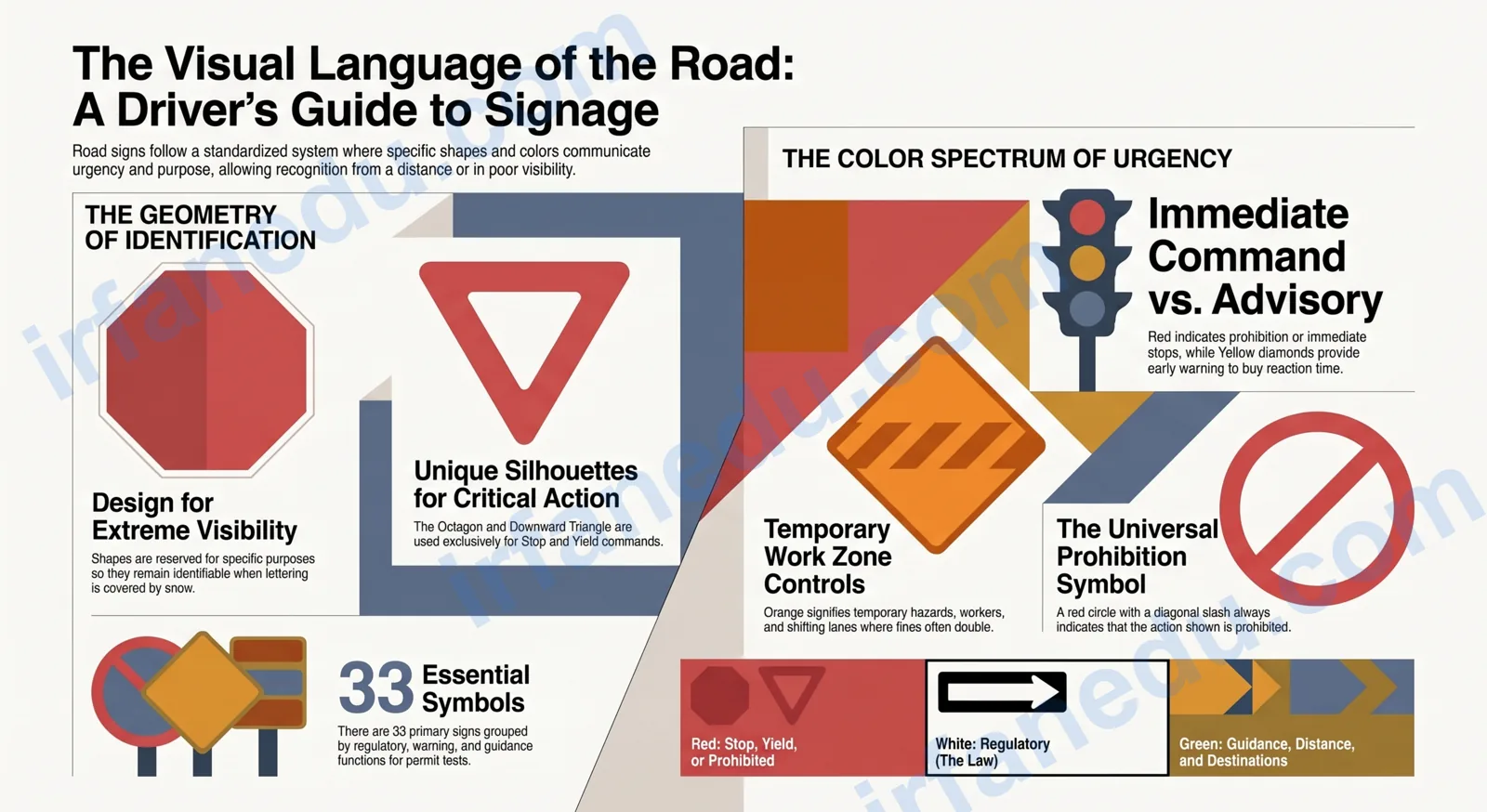
Every sign shape is reserved for one purpose, so you can identify a sign at a distance, in the dark, or when snow covers the lettering. This is deliberate design, not decoration.
- Octagon. Stop. Used for nothing else, anywhere in the country.
- Downward triangle. Yield. Slow, give way, stop only if you must.
- Diamond. Warning about a condition on or near the road ahead.
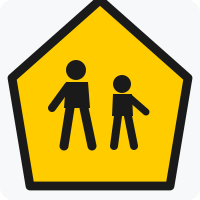
- Pentagon. School zone or school crossing.
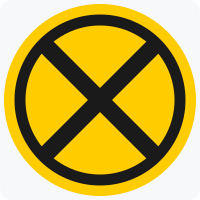
- Round. Railroad crossing ahead.
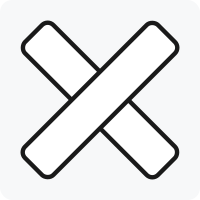
- Crossbuck. The X at the crossing itself. Treat it as a yield sign.
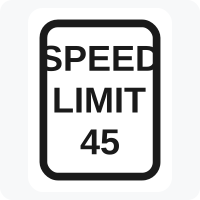
- Vertical rectangle. A regulation you must obey, such as a speed limit.
- Horizontal rectangle. Guidance: destinations, distances, and routes.
Color carries urgency
- Red. Stop, yield, or prohibited.
- Yellow. General warning. Something ahead needs your attention.
- Orange. Temporary work zone control. Expect workers and shifting lanes.
- Green. Guidance and permitted movements.
- Blue. Motorist services: fuel, food, lodging, hospitals.
- Brown. Parks, campgrounds, and recreational sites.
- White. A regulation, usually with black lettering.
Regulatory Signs
The signs that carry the force of law.
What makes a sign regulatory
A regulatory sign tells you what you must or must not do. Disobeying one is a traffic violation, not merely poor judgment. Most are black on white, and the prohibitions add a red circle with a diagonal slash.
Speed limits
A posted speed limit is a maximum for ideal conditions. In rain, fog, heavy traffic, or darkness, the legal safe speed is lower. Every state has a basic speed law that lets an officer cite you for driving too fast for conditions even when you are under the posted number.
Turn and lane control
- NO TURN ON RED. Overrides the usual right-on-red permission at that intersection.
- Lane use arrows. A pavement arrow with the word ONLY requires every vehicle in that lane to make the turn shown.
- DO NOT ENTER. You are about to drive against traffic. Stop and turn around.
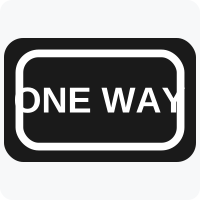
- ONE WAY. Traffic flows only in the direction of the arrow.
Warning Signs
Yellow diamonds that buy you reaction time.
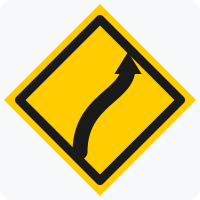
Warnings are early information
A warning sign appears far enough ahead that you can respond before you reach the hazard. Slowing when you see the sign is the whole point; braking once you are already in the curve is too late and costs you traction.
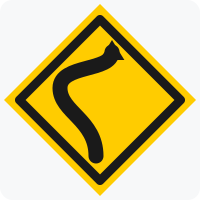
- Curve and winding road. One arrow means a single bend, an S-shape means a series of them.
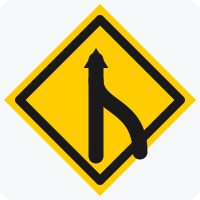
- Merge and lane ends. Traffic will join yours, or your lane will run out. Adjust speed and position early.
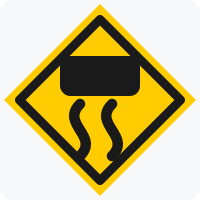
- Slippery when wet. A car with wavy lines behind it. Grip drops sharply in the first minutes of rain.
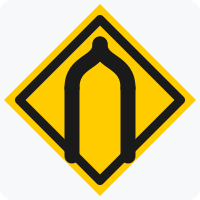
- Divided highway ends. The median stops and you will meet oncoming traffic.
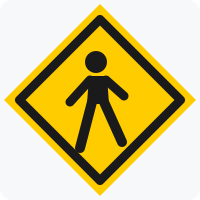
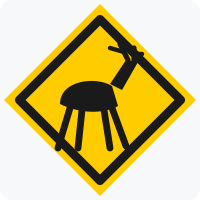
- Crossings. Pedestrian, bicycle, deer, and school symbols all mean scan the roadside and cover the brake.
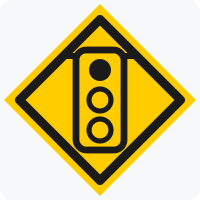
- Signal ahead. A traffic light is coming up where a hill or curve hides it.
Work Zones and Guide Signs
Orange means people are working a few feet from your car.
Orange is temporary
Orange signs, cones, and barrels exist only while work is under way. Lane positions change without much notice, surfaces are uneven, and workers stand close to live traffic. Most states double fines in a work zone, and many apply the increase whether or not workers are visible.
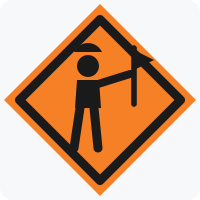
- Flagger ahead. A person directing traffic. Their signals override every sign and signal.
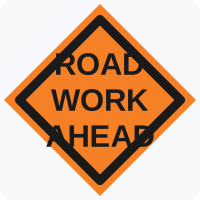
- Road work ahead. Reduce speed and expect a lane shift or closure.
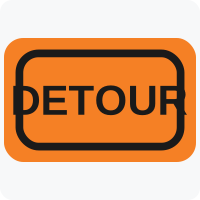
- Detour. Follow the marked route rather than improvising a shortcut.
Guide signs
Green panels give destinations and distances, blue points to services, and brown points to parks and recreation. None of them regulate your driving, so read them without letting your eyes leave the road for long.
Every sign in one chart
The 33 signs a permit test draws from, grouped by what they do. The artwork is drawn to the federal MUTCD shape and colour standard.
Regulatory signs
| Sign | Name | What it means |
|---|---|---|
|
Stop | Come to a complete halt |
|
Yield | Give way to traffic ahead |
|
Do not enter | Do not drive in from here |
|
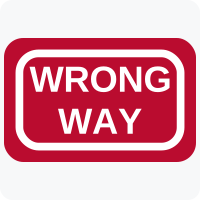
Wrong way | You are facing oncoming traffic |
|
Speed limit | Maximum legal speed |
|
One way | Traffic flows one direction only |
|
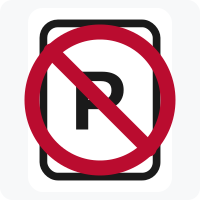
No parking | Parking is not allowed here |
|
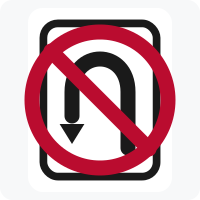
No U-turn | U-turns are prohibited |
Warning signs
| Sign | Name | What it means |
|---|---|---|
|
School zone | School zone or crossing |
|
Railroad crossing ahead | Railroad crossing ahead |
|
Railroad crossbuck | Yield at the railroad tracks |
|
Curve ahead | The road bends right ahead |
|
Winding road | A series of curves ahead |
|
Merge | Traffic merges ahead |
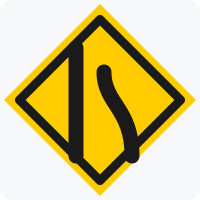 |
Lane ends | A lane is about to disappear ahead |
|
Slippery when wet | Slippery when wet |
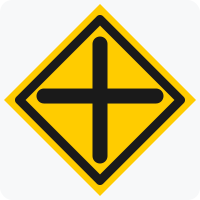 |
Crossroad | A crossroad is ahead |
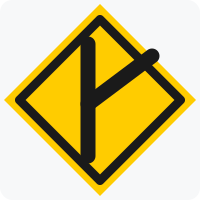 |
Side road | A side road joins ahead |
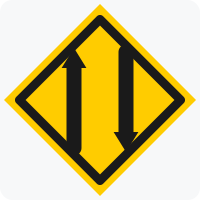 |
Two-way traffic | Two-way traffic ahead |
|
Divided highway ends | Divided highway ends |
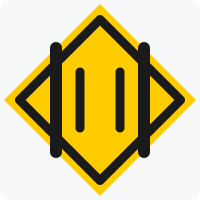 |
Narrow bridge | The bridge ahead is narrow |
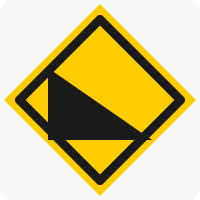 |
Steep hill | Steep downgrade ahead |
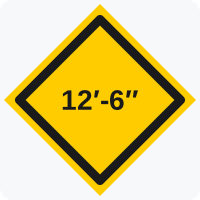 |
Low clearance | Limited height under structure |
|
Pedestrian crossing | Watch for people crossing |
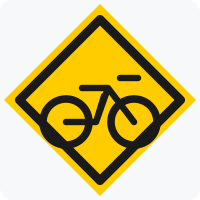 |
Bicycle crossing | Watch for cyclists |
|
Animal crossing | Animals cross frequently here |
|
Signal ahead | A traffic light is ahead |
Work zone and guide signs
| Sign | Name | What it means |
|---|---|---|
|
Flagger ahead | A flagger directs traffic ahead |
|
Road work ahead | Road work ahead |
|
Detour | Follow the marked detour |
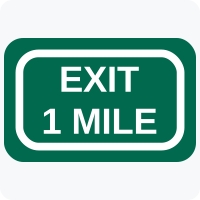 |
Exit guide | Exit and destination guidance |
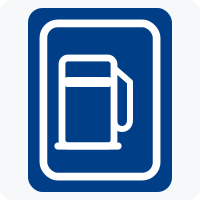 |
Motorist services | Motorist services nearby |
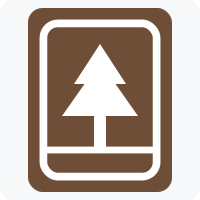 |
Recreation area | Park or recreation area |
Check yourself
19 questions on what you have just read. Tap an option to see whether you were right.
An eight-sided sign always means:
Show the answer
Correct answer: C. Stop
Shape carries meaning on its own so a driver can recognize a sign even when it is dirty or the lettering is hidden by snow. The octagon is reserved exclusively for STOP.
A diamond-shaped sign is used to:
Show the answer
Correct answer: A. Warn you about a condition on or near the road ahead
Diamond signs are warning signs. They are normally yellow with black symbols, or orange in a work zone. They alert you to something ahead such as a curve, a merge, or a crossing, so you can slow down before you reach it.
Green highway signs are used to show:
Show the answer
Correct answer: C. Directions, distances, and route guidance
Green is the guide color. Green panels give destinations, exit numbers, and the distance to the places ahead. They tell you where you are going rather than how you must drive.
What color and shape identifies a yield sign?
Show the answer
Correct answer: B. A red and white downward-pointing triangle
The downward-pointing triangle with a red border and white center is used only for YIELD. Like the octagon for STOP, the shape alone is enough to identify it.
White rectangular signs with black lettering usually give you:
Show the answer
Correct answer: A. A regulation you are legally required to obey
Black-on-white rectangles are regulatory signs. Speed limits, lane use rules, turn restrictions, and parking rules all use this format, and disobeying one is a traffic violation.
A rectangular sign reading SPEED LIMIT 45 means:
Show the answer
Correct answer: B. 45 mph is the maximum legal speed in ideal conditions
A posted speed limit is the maximum legal speed under ideal conditions. In rain, fog, heavy traffic, or darkness the safe speed is lower, and driving at the posted number can still be unlawful if it is too fast for conditions.
A red circle with a diagonal slash over a symbol always means:
Show the answer
Correct answer: C. The action shown is prohibited
The red circle-and-slash is the universal prohibition symbol. Whatever appears inside it, whether a U-turn arrow, a truck, or a pedestrian, is not permitted at that location.
A white rectangular sign showing a red circle around the words RIGHT LANE MUST TURN RIGHT means:
Show the answer
Correct answer: B. Vehicles in the right lane are required to turn right
This is a mandatory lane-use regulation. If you are in that lane as you reach the intersection you must turn right. Choose your lane early so you are not forced into a turn you did not want.
The word ONLY beneath a turn arrow painted on the pavement means:
Show the answer
Correct answer: C. Every vehicle in that lane must make the turn shown
Pavement arrows carry the same legal force as an overhead lane-use sign. If your lane is marked with a turn arrow and the word ONLY, you are required to make that turn from that lane.
A yellow sign showing an arrow that curves to the right means:
Show the answer
Correct answer: D. The road ahead curves to the right, so slow down
A yellow curve sign warns of a bend in the road ahead. Slow down before you enter the curve rather than braking in the middle of it, because braking while turning reduces your grip.
A yellow diamond showing a car with wavy lines behind it warns that:
Show the answer
Correct answer: D. The road ahead can be slippery when wet
This is the slippery when wet sign. Reduce your speed, increase your following distance, and avoid sudden steering or braking. Traction is worst in the first few minutes of rain, when oil rises to the surface.
You see a yellow sign showing two lanes merging into one. You should:
Show the answer
Correct answer: A. Adjust your speed and position so vehicles can blend together safely
A merge warning means traffic from another lane will join yours. Neither driver automatically has the right-of-way, so adjust speed and spacing cooperatively. Blocking the merge or racing to the front causes collisions.
A yellow sign showing a person walking means:
Show the answer
Correct answer: C. Watch for people crossing the road ahead
This warns of a pedestrian crossing. Scan the roadside, cover your brake, and be ready to stop. Never pass a vehicle that has stopped at a crosswalk, because it is probably yielding to someone you cannot see.
A yellow diamond showing a deer means:
Show the answer
Correct answer: B. Animals frequently cross this stretch of road
This warns of frequent animal crossings. Deer move most at dawn and dusk and rarely travel alone, so if one crosses expect more behind it. Slow down and brake in a straight line rather than swerving.
A yellow diamond containing a traffic light symbol means:
Show the answer
Correct answer: A. A traffic signal is ahead, possibly hidden by a curve or hill
Signal ahead warns that a traffic light is coming up where you might not expect it, often over a rise or around a bend. Ease off the accelerator and be ready to stop.
An orange sign or orange cones tell you that:
Show the answer
Correct answer: C. You are in or approaching a work zone
Orange is used only for temporary traffic control in construction and maintenance zones. Expect workers, equipment, uneven surfaces, and reduced speed limits, and be ready for lanes to shift without much warning.
Blue signs along a highway most often mark:
Show the answer
Correct answer: B. Motorist services such as fuel, food, lodging, and hospitals
Blue is the service color. Blue panels point to fuel, food, lodging, rest areas, and medical services. Brown, by contrast, points to parks, campgrounds, and recreation areas.
In a work zone, an orange diamond showing a person holding a flag means:
Show the answer
Correct answer: C. A flagger is directing traffic ahead
A flagger controls traffic through the work zone and their instructions override signs and signals. Slow down, watch for their hand signals or paddle, and be ready to stop.
Brown highway signs are used to point the way to:
Show the answer
Correct answer: B. Parks, campgrounds, and other recreational or cultural sites
Brown is reserved for recreational and cultural interest guidance: state parks, historic sites, campgrounds, and trailheads. Blue handles motorist services and green handles general destinations.
Answer key
Every answer in one place, in question order.
| No. | Ans | The correct option |
|---|---|---|
| 1 | C | Stop |
| 2 | A | Warn you about a condition on or near the road ahead |
| 3 | C | Directions, distances, and route guidance |
| 4 | B | A red and white downward-pointing triangle |
| 5 | A | A regulation you are legally required to obey |
| 6 | B | 45 mph is the maximum legal speed in ideal conditions |
| 7 | C | The action shown is prohibited |
| 8 | B | Vehicles in the right lane are required to turn right |
| 9 | C | Every vehicle in that lane must make the turn shown |
| 10 | D | The road ahead curves to the right, so slow down |
| 11 | D | The road ahead can be slippery when wet |
| 12 | A | Adjust your speed and position so vehicles can blend together safely |
| 13 | C | Watch for people crossing the road ahead |
| 14 | B | Animals frequently cross this stretch of road |
| 15 | A | A traffic signal is ahead, possibly hidden by a curve or hill |
| 16 | C | You are in or approaching a work zone |
| 17 | B | Motorist services such as fuel, food, lodging, and hospitals |
| 18 | C | A flagger is directing traffic ahead |
| 19 | B | Parks, campgrounds, and other recreational or cultural sites |
More permit test practice
Everything on this site tagged DMV lives in the DMV category.
Sources