
Warning Signs Practice Test
What is in this test
Tap an option and the page marks it and opens the explanation. Nothing is timed and nothing is stored, so you can work through it in one sitting or come back to it. If you would rather not tap through, every answer is also listed in the answer key at the bottom.
| Subject | Questions |
|---|---|
| Traffic signs | 32 |
Difficulty mix: 2 easy, 18 medium, 12 hard. The questions run easiest first.
The 32 questions
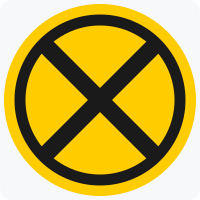
A round sign with a black X and the letters RR warns you that:
Show the answer
Correct answer: C. A railroad crossing is ahead
The round yellow sign with a large X and two R letters is the advance warning for a railroad crossing. Slow down, look and listen in both directions, and be prepared to stop before the tracks.
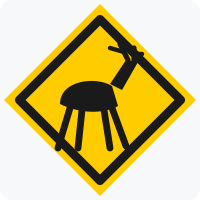
You are driving at night and see this sign. What is the greatest danger?
Show the answer
Correct answer: D. Animals are most active at dawn and dusk and rarely cross alone
If one deer crosses, expect more behind it. Brake firmly in a straight line rather than swerving: leaving your lane at speed causes far worse crashes than striking the animal.
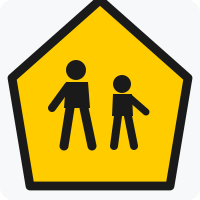
A five-sided sign with a pointed top is used to mark:
Show the answer
Correct answer: D. A school zone or school crossing
The pentagon shape is reserved for school warning signs. It marks a school zone or a school crossing. Slow to the posted school speed limit while children are present and be ready to stop for pedestrians.
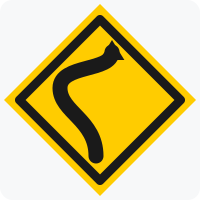
A yellow sign with two arrows curving in opposite directions, like an S, means:
Show the answer
Correct answer: D. A series of curves is ahead
This sign warns of winding road: three or more curves in close succession. Reduce speed and stay in your lane, because oncoming drivers may drift wide on the bends.

At a railroad crossing marked only by a crossbuck sign and no gates, you must:
Show the answer
Correct answer: D. Yield: slow down, look both ways, and cross only when no train is coming
A crossbuck has the same legal force as a yield sign. Slow, look and listen in both directions, and cross only when you are sure no train is approaching and there is room for your vehicle on the far side.
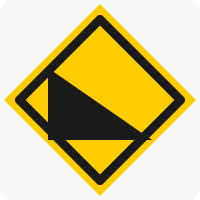
A yellow diamond showing a truck on a downward slope means:
Show the answer
Correct answer: D. A steep downgrade is ahead
This warns of a steep hill ahead. Shift to a lower gear before you start down so the engine helps hold your speed, rather than riding the brakes, which can overheat them and cause brake fade.
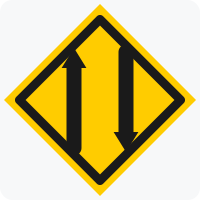
A yellow diamond showing two arrows pointing in opposite directions on the same road means:
Show the answer
Correct answer: C. Two-way traffic ahead on a road that was one-way
This warns that a one-way roadway is about to carry traffic in both directions. Keep to the right of the center line and do not use the oncoming lane to pass.
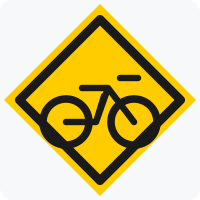
A yellow sign showing a bicycle warns you that:
Show the answer
Correct answer: A. Cyclists may be crossing or sharing the road ahead
This warns of a bicycle crossing or a shared roadway. Give cyclists room when passing, check your mirrors and blind spot before turning across a bike lane, and never squeeze past in the same lane.
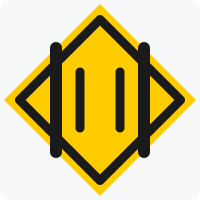
A yellow diamond showing a narrow bridge symbol means:
Show the answer
Correct answer: A. The bridge ahead is narrower than the road you are on
Narrow bridge means the roadway pinches in. Slow down, stay centered in your lane, and do not attempt to pass while crossing, because the shoulders disappear.
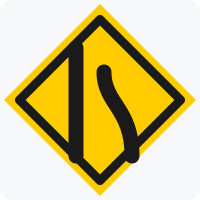
This sign is posted where a lane is about to disappear. What should you do?
Show the answer
Correct answer: A. Signal early, match the speed of the through lane, and merge before the taper
Merge well before the lane physically runs out. Stopping at the taper is dangerous because following drivers do not expect it, and racing to the front forces a hard merge.
This sign warns that the road ahead will:
Show the answer
Correct answer: B. Become narrower than the road you are on
The shoulders disappear on a narrow bridge and there is little room for error. Slow down, stay centered in your lane, and do not attempt to pass while crossing.
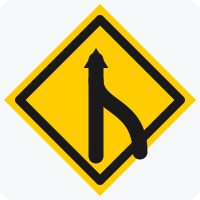
You see this sign. Vehicles will be joining your roadway, so you should:
Show the answer
Correct answer: B. Adjust your speed and spacing to let traffic blend in safely
Neither driver automatically has the right-of-way at a merge. Cooperating early, by opening a gap or adjusting speed, prevents the last-second swerve that causes most merge collisions.
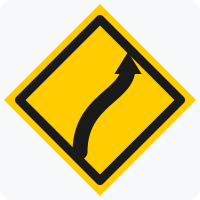
You see this sign while driving at 55 mph on a rural road. The safest response is to:
Show the answer
Correct answer: A. Slow down before you enter the curve, then hold a steady speed through it
Braking and turning at once asks the tires to do two jobs and can break traction. Do the slowing in a straight line, then accelerate gently as the curve opens up.
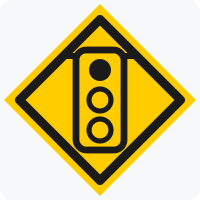
This sign is posted ahead of an intersection. It tells you that:
Show the answer
Correct answer: C. A traffic light is coming up, often hidden by a hill or curve
Signal ahead exists where sight distance is poor. Ease off the accelerator so you are not surprised by a red light over a crest or around a bend.
This sign is posted on a school day. You must:
Show the answer
Correct answer: C. Reduce to the posted school speed and watch for children and crossing guards
The pentagon marks a school zone or crossing. Fines are usually doubled, and a crossing guard’s hand signals must be obeyed the same way as a police officer’s.
This sign warns of a series of bends. Compared with a single curve sign, you should:
Show the answer
Correct answer: A. Hold a lower, steady speed through several curves rather than accelerating between them
Winding road means three or more curves in succession. Accelerating between them leaves you entering the next bend too fast, and oncoming drivers may drift wide toward you.
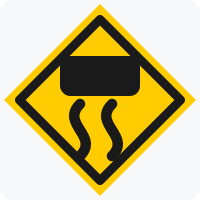
You see this sign shortly after a rain shower begins. Why is that timing important?
Show the answer
Correct answer: C. Oil and rubber lift into a slick film in the first minutes of rain
Traction is worst just after rain starts, before the surface contaminants wash away. Reduce speed, lengthen your following distance, and make every input smooth.
This sign appears on a downgrade. The correct technique is to:
Show the answer
Correct answer: A. Shift to a lower gear before the descent so the engine helps hold your speed
Continuous braking overheats the brakes and causes fade, which is how runaway vehicles happen. Engine braking in a lower gear does the work and keeps the brakes available.
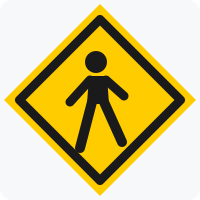
A yellow sign showing a person walking is placed before a crosswalk. Its purpose is to:
Show the answer
Correct answer: D. Warn drivers to scan for people crossing and be ready to stop
Warning signs address the driver. Cover the brake, and never pass a vehicle stopped at a crosswalk, because it is almost certainly yielding to someone you cannot see.
You are about to make a right turn and this sign is posted where a bike lane runs beside you. You should:
Show the answer
Correct answer: A. Check your mirror and blind spot for cyclists before crossing the bike lane
The right hook, where a turning driver crosses a cyclist going straight, is one of the most common bicycle collisions. A mirror check plus a shoulder check prevents it.
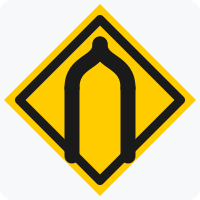
A yellow diamond showing a divided road ending means:
Show the answer
Correct answer: D. The median ends and you will meet oncoming traffic ahead
When a divided highway ends, the physical barrier separating the directions stops and the road becomes two-way. Keep right and expect oncoming vehicles in the lane beside you.
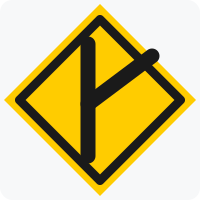
A yellow sign with a black arrow bending to the left and a smaller arrow joining it from the right warns of:
Show the answer
Correct answer: B. A side road entering from the right
The side road sign warns that another road joins yours ahead. Watch for vehicles entering the roadway, especially drivers who may not see you or who misjudge your speed.
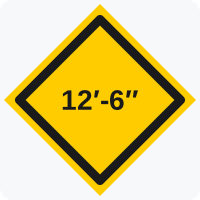
A yellow sign reading LOW CLEARANCE 12 FT 6 IN tells you that:
Show the answer
Correct answer: A. Vehicles taller than that measurement must not pass under the structure
Clearance signs give the vertical space available under a bridge or tunnel. If your vehicle, including anything on the roof, is taller than the posted figure you must find another route.
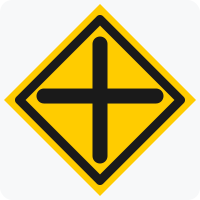
A yellow diamond with a black cross shape in the middle warns of:
Show the answer
Correct answer: A. A crossroad intersection ahead
The plus-shaped symbol warns of a crossroad where another road crosses yours. It does not tell you who must yield, so look for a stop sign, yield sign, or signal as you get closer.
You are at a railroad crossing marked with this sign, and gates are down. You should:
Show the answer
Correct answer: A. Wait until the gates rise fully and the lights stop flashing
Driving around a lowered gate is the leading cause of crossing fatalities, and a second train may be following the first. Wait for the gates to rise and the signals to stop.
You are driving a vehicle 13 feet tall and see this sign. You must:
Show the answer
Correct answer: D. Take a different route, because your vehicle is taller than the posted clearance
The posted figure is the vertical space available. Anything taller, including roof racks and loads, will strike the structure. Bridge strikes cause serious injuries and enormous damage.
This sign means the road ahead will carry traffic in both directions. The main risk is:
Show the answer
Correct answer: B. Drifting into the oncoming lane, or trying to pass as if it were still one-way
Drivers used to a one-way roadway sometimes keep using the left lane. Once two-way traffic begins, keep right of the center line and do not overtake using the oncoming lane.
You are traveling in the right lane and this sign appears. What does it warn about?
Show the answer
Correct answer: B. Another road joins yours ahead, so watch for entering vehicles
The side road sign warns of traffic entering from a joining road. Drivers pulling out often misjudge the speed of highway traffic, so cover the brake and scan the junction.
You are on a divided highway and this sign appears. What changes ahead?
Show the answer
Correct answer: C. The median ends and you will meet oncoming traffic on the same roadway
Once the physical separation ends, the road becomes two-way. Keep right, expect headlights in the lane beside you, and do not treat the left lane as yours any more.
This sign warns of a crossroad. What does it NOT tell you?
Show the answer
Correct answer: B. Which driver has to yield at the intersection
A warning sign describes the geometry, not the right-of-way. Look for a stop sign, yield sign, or signal as you get closer to learn who must give way.
This sign is round with a large X. How far ahead is the hazard it warns about?
Show the answer
Correct answer: C. Far enough ahead that you can slow down before you reach the tracks
The round yellow sign is an advance warning, placed back from the crossing. The crossbuck at the tracks themselves is the one that carries yield authority.
A sign shows a speed number on a yellow background beside a curve symbol. This number is:
Show the answer
Correct answer: D. An advisory speed for taking the curve safely in good conditions
Yellow means warning, so the number is advisory rather than regulatory. It is still the speed the curve was engineered for, and it assumes dry pavement and good visibility.
Answer key
Every answer in one place, in question order.
| No. | Ans | The correct option |
|---|---|---|
| 1 | C | A railroad crossing is ahead |
| 2 | D | Animals are most active at dawn and dusk and rarely cross alone |
| 3 | D | A school zone or school crossing |
| 4 | D | A series of curves is ahead |
| 5 | D | Yield: slow down, look both ways, and cross only when no train is coming |
| 6 | D | A steep downgrade is ahead |
| 7 | C | Two-way traffic ahead on a road that was one-way |
| 8 | A | Cyclists may be crossing or sharing the road ahead |
| 9 | A | The bridge ahead is narrower than the road you are on |
| 10 | A | Signal early, match the speed of the through lane, and merge before the taper |
| 11 | B | Become narrower than the road you are on |
| 12 | B | Adjust your speed and spacing to let traffic blend in safely |
| 13 | A | Slow down before you enter the curve, then hold a steady speed through it |
| 14 | C | A traffic light is coming up, often hidden by a hill or curve |
| 15 | C | Reduce to the posted school speed and watch for children and crossing guards |
| 16 | A | Hold a lower, steady speed through several curves rather than accelerating between them |
| 17 | C | Oil and rubber lift into a slick film in the first minutes of rain |
| 18 | A | Shift to a lower gear before the descent so the engine helps hold your speed |
| 19 | D | Warn drivers to scan for people crossing and be ready to stop |
| 20 | A | Check your mirror and blind spot for cyclists before crossing the bike lane |
| 21 | D | The median ends and you will meet oncoming traffic ahead |
| 22 | B | A side road entering from the right |
| 23 | A | Vehicles taller than that measurement must not pass under the structure |
| 24 | A | A crossroad intersection ahead |
| 25 | A | Wait until the gates rise fully and the lights stop flashing |
| 26 | D | Take a different route, because your vehicle is taller than the posted clearance |
| 27 | B | Drifting into the oncoming lane, or trying to pass as if it were still one-way |
| 28 | B | Another road joins yours ahead, so watch for entering vehicles |
| 29 | C | The median ends and you will meet oncoming traffic on the same roadway |
| 30 | B | Which driver has to yield at the intersection |
| 31 | C | Far enough ahead that you can slow down before you reach the tracks |
| 32 | D | An advisory speed for taking the curve safely in good conditions |
More permit test practice
Everything on this site tagged DMV lives in the DMV category.
Sources