
Safe Driving Study Guide
On this page
Space and Stopping
The only cushion you actually control is the one in front.
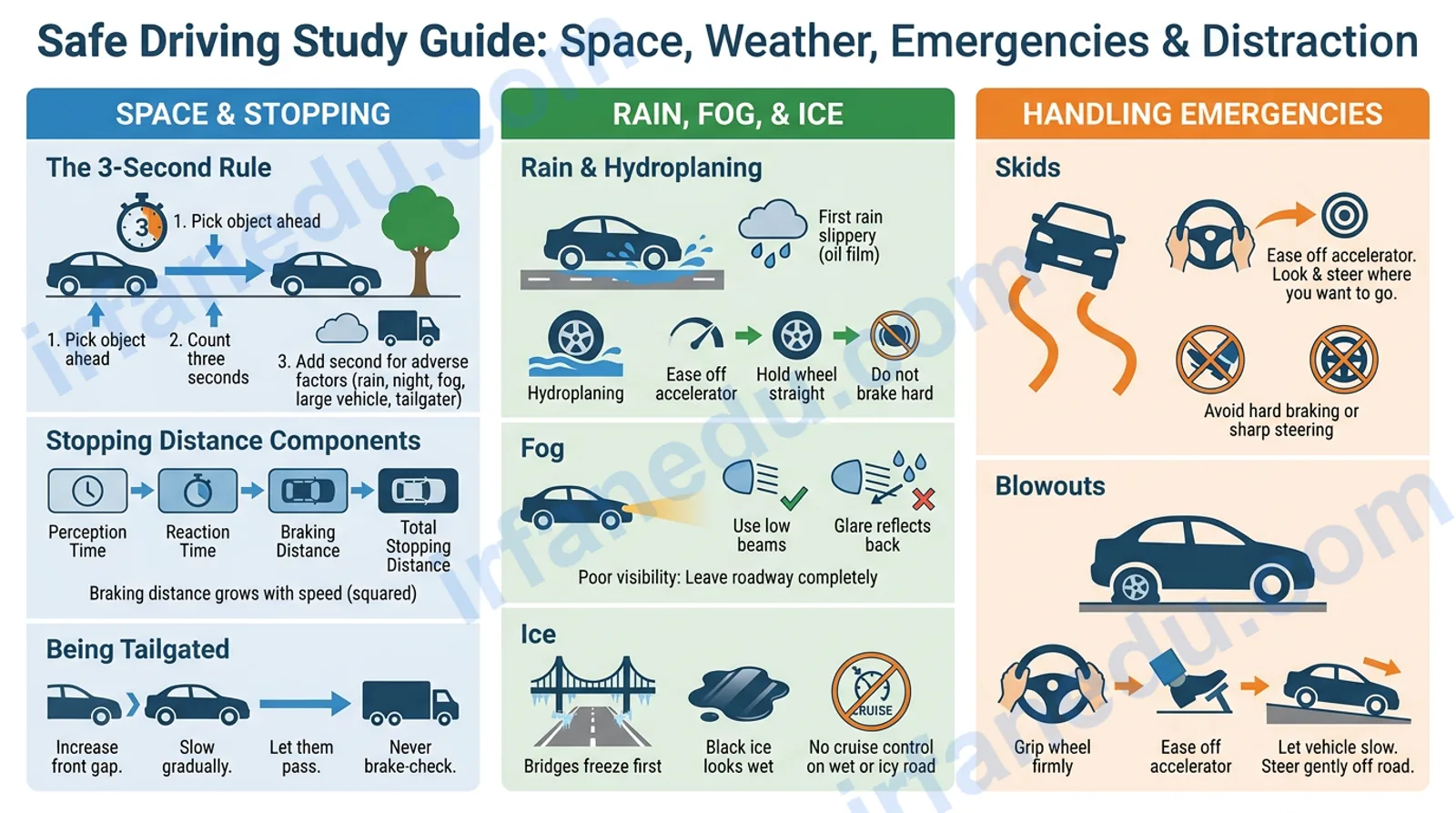
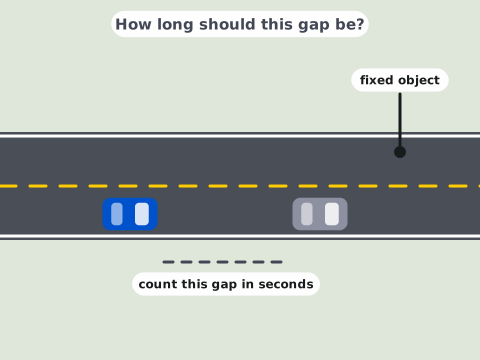
The three-second rule
Pick a fixed object ahead. When the vehicle in front passes it, start counting. If you reach it before three seconds, you are too close. Add a second for each adverse factor: rain, night, fog, a large vehicle ahead, or a tailgater behind.
What stopping distance is made of
- Perception. The time to notice the hazard exists.
- Reaction. The time to move your foot to the brake.
- Braking. The distance the vehicle travels while slowing.
Being tailgated
You cannot control the space behind you. Open a bigger gap in front so you can slow gradually rather than braking hard, and let the tailgater pass at the first safe opportunity. Never brake-check.
Rain, Fog, and Ice
Grip is a budget, and weather cuts it.
Rain
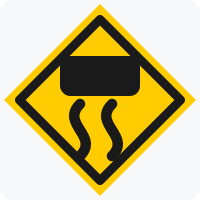
The first few minutes of rain after a dry spell are the most slippery, because oil and rubber on the surface lift into a film before being washed away. Hydroplaning happens when a layer of water lifts the tires clear of the road: ease off the accelerator, hold the wheel straight, and do not brake hard until you feel grip return.
Fog
Use low beams. High beams reflect off the droplets and bounce glare back at you. If visibility becomes too poor to continue, leave the roadway completely before stopping, and never follow the tail lights of the car ahead as a guide.
Ice
Bridges, overpasses, and shaded stretches freeze before the surrounding road, because they lose heat from above and below. Black ice is a thin clear film that looks like wet pavement. If the surface ahead looks unusually glossy, slow down well before you reach it.
Handling Emergencies
What to do in the seconds that matter.
Skids
Ease off the accelerator, keep both hands on the wheel, and look and steer where you want the front of the car to go. Braking hard or steering sharply makes a skid worse. Be ready for a gentle counter-correction as grip returns.
Blowouts
A blowout pulls the vehicle toward the failed tire. Grip the wheel firmly, ease off the accelerator, and let the vehicle slow on its own before steering gently off the road. Braking hard transfers weight unevenly and can spin you.
Brake failure
- Pump the pedal. This may restore pressure in a hydraulic system.
- Downshift. Engine braking slows the vehicle without the brakes.
- Parking brake, gradually. Apply it progressively while steering to a safe stop.
- Do not switch off the engine. That can lock the steering and kill the power assistance.
Wheels off the pavement
Do not jerk the wheel back. Ease off the accelerator, hold straight, slow down, then ease back onto the pavement at a shallow angle. Snatching the wheel at speed is a leading cause of rollovers.
Distraction and Fatigue
The impairments that do not show up on a breath test.
Phones
Reading a message takes your eyes off the road for several seconds. At 55 mph, five seconds covers the length of a football field driven blind. Most states restrict handheld use, and many ban all phone use for permit and provisional license holders, hands-free included.
Drowsiness
Fatigue impairs reaction time much like alcohol. The warning signs are repeated yawning, drifting within your lane, heavy eyelids, and not remembering the last few miles. Opening a window or turning up the radio does nothing. The only real remedy is to stop and sleep, or change drivers.
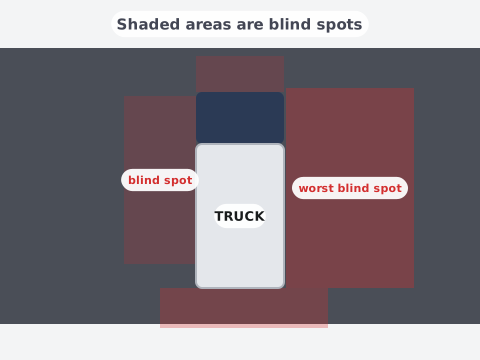
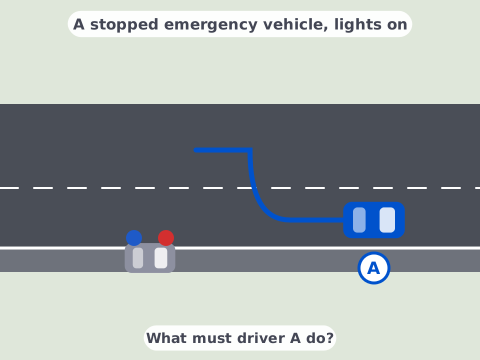
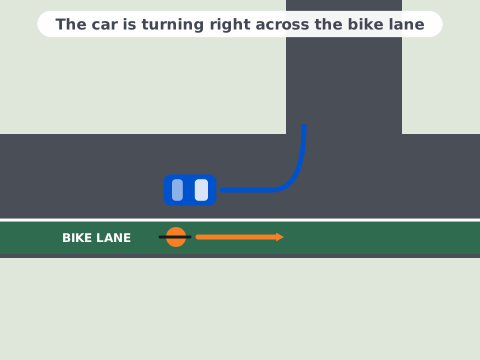
The situations, drawn
The same rules as a picture, which is how they turn up on the test.
Check yourself
18 questions on what you have just read. Tap an option to see whether you were right.
In good conditions, the minimum following distance behind the vehicle ahead should be about:
Show the answer
Correct answer: C. Three seconds
Pick a fixed object ahead. When the vehicle in front passes it, count seconds until you reach it. Three seconds is the minimum in good conditions, and you should add time in rain, fog, darkness, or when following a large vehicle.
Your following distance should be increased when:
Show the answer
Correct answer: D. It is raining, you are being tailgated, or you are following a motorcycle
Add at least one second for each adverse factor: wet or icy roads, night, fog, towing, following a large vehicle that blocks your view, or being tailgated. Extra space in front is the only cushion you control.
Total stopping distance is made up of:
Show the answer
Correct answer: D. Perception distance, reaction distance, and braking distance
You must first perceive the hazard, then react by moving your foot to the brake, and only then does the vehicle begin slowing. At 55 mph the perception and reaction phases alone cover well over 100 feet before the brakes even engage.
If you double your speed, your braking distance becomes roughly:
Show the answer
Correct answer: C. Four times as long
Braking distance grows with the square of speed, so doubling speed roughly quadruples the distance needed to stop. This is why small increases in speed have such a large effect on crash severity.
You are being tailgated by another driver. The safest response is to:
Show the answer
Correct answer: B. Increase the space in front of you and, if possible, let them pass
You cannot control the space behind you, only in front. Opening a larger gap ahead lets you slow gradually instead of braking hard. Move right or pull over when it is safe and let the tailgater by.
Hydroplaning happens when:
Show the answer
Correct answer: A. A layer of water lifts the tires off the road surface
At speed on standing water the tire cannot channel the water away and rides up on it, losing steering and braking. Ease off the accelerator, hold the wheel straight, and do not brake hard until you feel the tires grip again.
When is a wet road most slippery?
Show the answer
Correct answer: A. During the first few minutes of rain after a dry spell
Oil and rubber build up on the surface during dry weather. The first rain lifts them into a slick film before washing them away, so the opening minutes of a shower are the most treacherous.
In heavy fog, you should use:
Show the answer
Correct answer: D. Low beam headlights
High beams reflect off fog droplets and bounce glare back at you. Low beams throw light under the fog. Slow down, increase your following distance, and if visibility becomes too poor, leave the roadway completely and stop with your lights on.
You are driving on an icy road. Where is ice most likely to form first?
Show the answer
Correct answer: A. On bridges, overpasses, and shaded areas
Bridges and overpasses lose heat from above and below, so they freeze before the surrounding road. Shaded stretches and the first frost of the morning behave the same way. Slow well before you reach them.
Cruise control should not be used:
Show the answer
Correct answer: B. In rain, snow, ice, or heavy traffic
On a slippery surface cruise control may keep applying power as a wheel starts to slip, and it delays the instinctive lift off the accelerator. It also encourages a fixed speed in traffic that calls for constant adjustment.
Your vehicle begins to skid on a wet road. You should:
Show the answer
Correct answer: A. Ease off the accelerator and steer gently in the direction you want the front of the car to go
Harsh braking or steering during a skid makes it worse. Release the accelerator, keep both hands on the wheel, and look and steer where you want to go. Once traction returns, straighten up smoothly.
Your right wheels drift off the pavement onto a soft shoulder. You should:
Show the answer
Correct answer: B. Ease off the accelerator, hold the wheel firmly, and steer back gently when you have slowed
Jerking the wheel back onto the pavement at speed is a classic cause of rollovers and head-on collisions. Slow first, keep straight, then ease back onto the road at a shallow angle.
A tire blows out while you are driving. You should:
Show the answer
Correct answer: C. Hold the wheel firmly, ease off the accelerator, and slow gradually before pulling off the road
A blowout pulls the vehicle toward the failed tire. Grip the wheel, keep the vehicle straight, and let it slow on its own. Braking hard transfers weight unevenly and can spin the vehicle.
Your brakes fail while driving. You should:
Show the answer
Correct answer: D. Pump the brake pedal, shift to a lower gear, and use the parking brake gradually while steering to a safe stop
Pumping may restore pressure in a hydraulic system. Downshifting uses engine braking, and the parking brake applied gradually adds more. Switching off the engine can lock the steering and disable power assistance.
Your vehicle is equipped with anti-lock brakes (ABS). In an emergency stop you should:
Show the answer
Correct answer: D. Press the pedal down firmly and hold it, steering around the hazard if needed
ABS does the pumping for you. Press hard and keep pressing; the pulsing you feel through the pedal is normal. Because the wheels keep rotating you can still steer, which is the main benefit of the system.
Which of these is a sign of drowsy driving?
Show the answer
Correct answer: C. Frequent yawning, drifting in your lane, and not remembering the last few miles
Drowsiness impairs reaction time much like alcohol. Opening a window or turning up the radio does not fix it. The only reliable remedy is to stop somewhere safe and sleep, or change drivers.
The safest action if you must use a phone while driving is to:
Show the answer
Correct answer: B. Pull over somewhere safe and stop before using it
Any phone use splits your attention, and texting takes your eyes off the road for several seconds at a time. Most states restrict or ban handheld use, and many ban all phone use by permit and provisional license holders.
Aggressive driving or road rage can result in:
Show the answer
Correct answer: D. Criminal charges, license suspension, and civil liability
Tailgating, weaving, brake-checking, and deliberately blocking another driver are chargeable offenses, and escalating into a confrontation can bring assault charges. Do not respond to provocation: back off, and call police if you feel threatened.
Answer key
Every answer in one place, in question order.
| No. | Ans | The correct option |
|---|---|---|
| 1 | C | Three seconds |
| 2 | D | It is raining, you are being tailgated, or you are following a motorcycle |
| 3 | D | Perception distance, reaction distance, and braking distance |
| 4 | C | Four times as long |
| 5 | B | Increase the space in front of you and, if possible, let them pass |
| 6 | A | A layer of water lifts the tires off the road surface |
| 7 | A | During the first few minutes of rain after a dry spell |
| 8 | D | Low beam headlights |
| 9 | A | On bridges, overpasses, and shaded areas |
| 10 | B | In rain, snow, ice, or heavy traffic |
| 11 | A | Ease off the accelerator and steer gently in the direction you want the front of the car to go |
| 12 | B | Ease off the accelerator, hold the wheel firmly, and steer back gently when you have slowed |
| 13 | C | Hold the wheel firmly, ease off the accelerator, and slow gradually before pulling off the road |
| 14 | D | Pump the brake pedal, shift to a lower gear, and use the parking brake gradually while steering to a safe stop |
| 15 | D | Press the pedal down firmly and hold it, steering around the hazard if needed |
| 16 | C | Frequent yawning, drifting in your lane, and not remembering the last few miles |
| 17 | B | Pull over somewhere safe and stop before using it |
| 18 | D | Criminal charges, license suspension, and civil liability |
More permit test practice
Everything on this site tagged DMV lives in the DMV category.
Sources