
Traffic Rules and Signals Study Guide
On this page
Traffic Signals
What each light and arrow actually permits.
The basic three
- Green. You may proceed if the intersection is clear. Green permits movement; it never grants priority over pedestrians already crossing.
- Yellow. Red is coming. Stop if you can do so safely. Continue only if stopping would put you inside the intersection or require harsh braking.
- Red. Stop behind the line. A right turn on red is generally allowed after a full stop, unless a sign forbids it.
Arrows
- Green arrow. A protected turn. Oncoming traffic is held at red, so the turn is yours.
- Flashing yellow arrow. A permitted but unprotected turn. Oncoming traffic still has green, so you must find your own gap.
- Steady yellow arrow. The turn period is ending. Clear the intersection or stop.
Flashing and dark signals
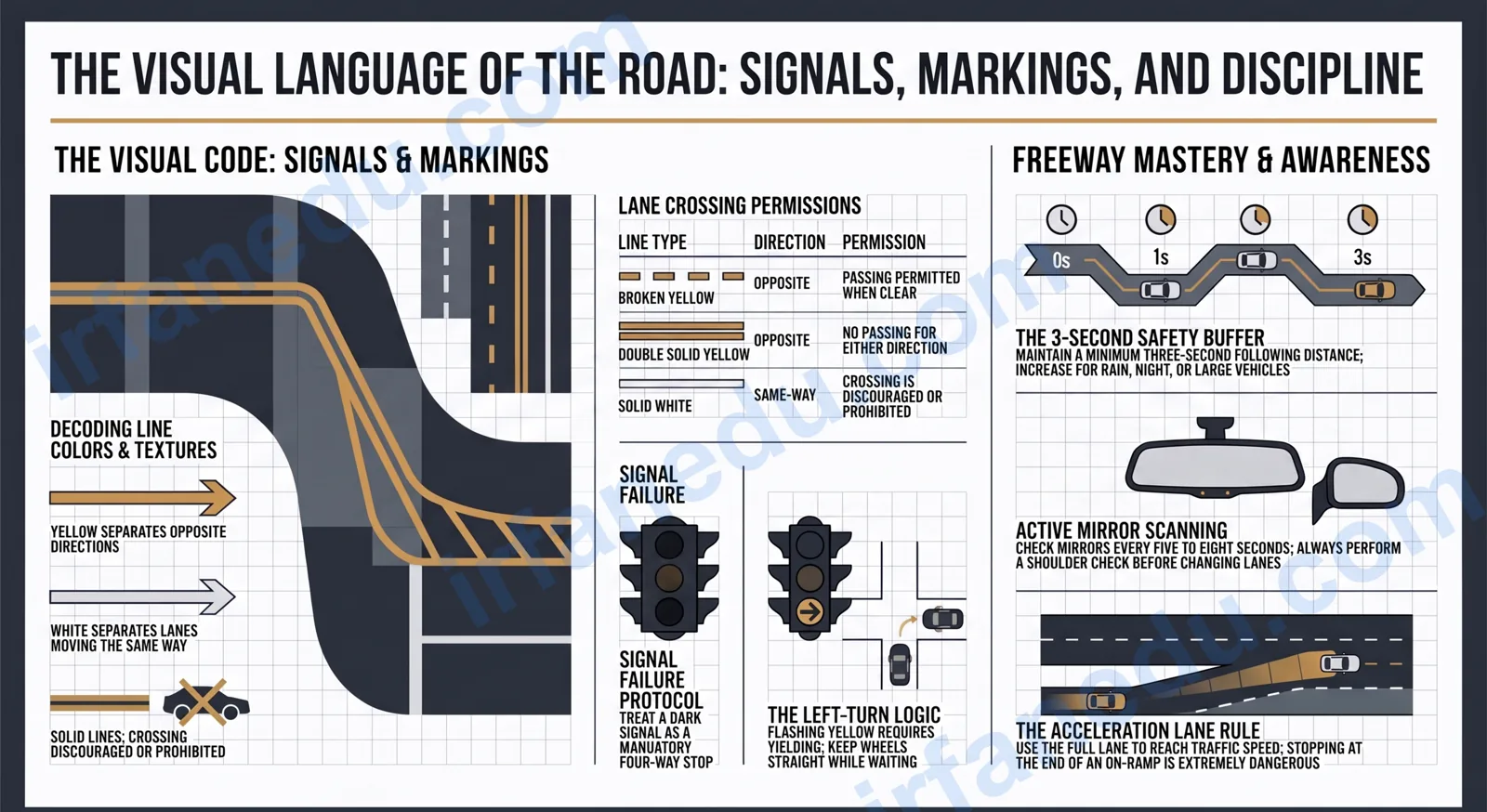
A flashing red has the same force as a stop sign: stop, yield, then proceed. A flashing yellow means slow down and continue with care. A completely dark signal must be treated as a four-way stop on every approach.
Lane Markings and Discipline
Yellow separates directions, white separates lanes.
Reading the lines
- Broken white. Lanes going the same way. You may change lanes when it is safe.
- Solid white. Lane changes are discouraged, and prohibited where the line is double or wide.
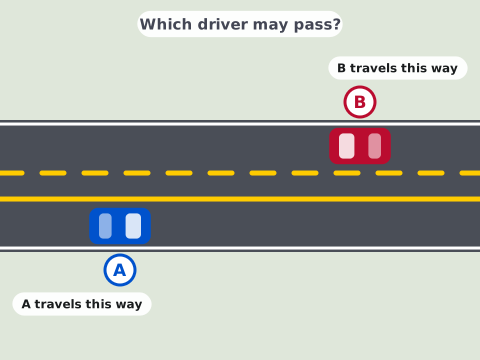
- Broken yellow. Opposite directions. You may cross to pass when the way ahead is clear.
- Solid yellow on your side. You may not cross to pass. Sight distance ahead is inadequate.
- Double solid yellow. Neither direction may pass.
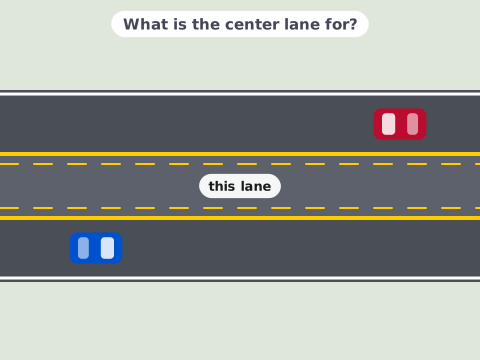
- Solid yellow outside, broken inside, both sides. A two-way left-turn lane. Use it only to prepare for or complete a left turn.
Keep right except to pass
On a multi-lane road the left lane is for overtaking. Sitting in it at the speed of surrounding traffic forces others to pass on your right, which uses their blind side and is measurably more dangerous.
Merging and Freeway Driving
The acceleration lane exists for a reason.
Entering
Use the whole acceleration lane to reach the speed of traffic, then signal and merge into a gap. Stopping at the end of an on-ramp is one of the most dangerous things you can do on a freeway, because following traffic does not expect it.
Traveling
- Space. Three seconds minimum, more in rain, at night, or behind a large vehicle.
- Scanning. Check mirrors every five to eight seconds and look well ahead, not at the car in front.
- Blind spots. Mirrors alone are not enough. Turn your head before every lane change.
Exiting
Move into the exit lane early and do your slowing in the deceleration lane, not on the through lane. If you miss the exit, continue to the next one. Reversing or cutting across the striped gore area causes serious collisions.
The situations, drawn
The same rules as a picture, which is how they turn up on the test.
Check yourself
14 questions on what you have just read. Tap an option to see whether you were right.
What does a flashing yellow traffic light mean?
Show the answer
Correct answer: D. Slow down and proceed with caution
A flashing yellow means proceed with caution. Slow down, scan the intersection, and be prepared for cross traffic, but you do not have to stop. A flashing red, by contrast, means stop and then proceed as at a stop sign.
A traffic signal is completely dark because of a power failure. You should treat the intersection as:
Show the answer
Correct answer: C. A four-way stop
When a signal is dark, every approach must stop as if there were a stop sign, then proceed in the order vehicles arrived. Never assume the cross street has a red light.
A steady yellow traffic light means:
Show the answer
Correct answer: D. The light is about to turn red, so stop if you can do so safely
Yellow is a warning that red is coming. Stop if you can do so safely. If you are already so close that stopping would require harsh braking or leave you inside the intersection, continue through with care.
A green arrow pointing left, shown with a red light, means:
Show the answer
Correct answer: D. You may turn left, and oncoming traffic is stopped
A green arrow is a protected turn: oncoming traffic has a red light, so the turn belongs to you. You must still yield to any pedestrian still in the crosswalk.
A flashing yellow arrow for a left turn means:
Show the answer
Correct answer: C. You may turn left after yielding to oncoming traffic and pedestrians
A flashing yellow arrow is a permitted, unprotected turn. Oncoming traffic still has a green light, so you must find your own gap. A steady yellow arrow means the permitted turn period is ending.
On a multi-lane highway, the left-most lane is intended for:
Show the answer
Correct answer: B. Passing and faster-moving traffic
Keep right except to pass. Traveling in the left lane at or below the speed of surrounding traffic causes other drivers to pass on the right, which is far more dangerous because it uses their blind side.
A solid white line between lanes of traffic going the same direction means:
Show the answer
Correct answer: A. Lane changes are prohibited or discouraged
A solid white line discourages or, when it is wide, prohibits crossing. A broken white line separates lanes going the same way and may be crossed when safe. Yellow lines separate traffic moving in opposite directions.
A double solid yellow line down the center of the road means:
Show the answer
Correct answer: B. Neither direction may cross to pass
A double solid yellow line prohibits passing in both directions. You may still cross it to turn into or out of a driveway or to enter a private road, where permitted, but not to overtake another vehicle.
You are on a road with a center lane marked on both sides with a solid yellow line outside and a broken yellow line inside. This lane is for:
Show the answer
Correct answer: C. Left turns from either direction, and it may not be used for through travel
This is a two-way left-turn lane, sometimes called a center turn lane. Drivers from either direction may use it to prepare for a left turn, but traveling along it is prohibited. Enter it shortly before the turn.
You are in the left lane and a vehicle behind you wants to pass. You should:
Show the answer
Correct answer: B. Move to the right lane when it is safe and let it pass
Even at the limit, the left lane is for passing. Move right and let faster traffic through. Trying to police another driver’s speed by blocking or brake-checking is dangerous and is itself an offense in many states.
When entering a freeway from an on-ramp, you should:
Show the answer
Correct answer: D. Use the acceleration lane to match the speed of traffic, then merge into a gap
The acceleration lane exists so you can reach highway speed before merging. Entering too slowly forces traffic to brake and is a common cause of freeway collisions. Signal, check your mirror and blind spot, then merge into a gap.
Before changing lanes you should:
Show the answer
Correct answer: A. Check your mirrors, signal, then check your blind spot over your shoulder before moving
Mirrors leave a blind spot large enough to hide a car or a motorcycle. Mirror, signal, shoulder check, then move. Signaling before the shoulder check gives other drivers time to react to your intention.
When may you legally cross a solid white edge line onto the shoulder of a freeway?
Show the answer
Correct answer: C. Only in an emergency, or where an officer or sign directs you
The shoulder is not a travel lane. Use it only for a genuine emergency stop or when directed. If you miss an exit, continue to the next one; reversing or cutting across the gore area is extremely dangerous.
You should check your mirrors:
Show the answer
Correct answer: A. Roughly every five to eight seconds, and always before braking, turning, or changing lanes
Regular scanning keeps a live picture of what is around you, so when you need to react you already know whether there is space beside or behind you.
Answer key
Every answer in one place, in question order.
| No. | Ans | The correct option |
|---|---|---|
| 1 | D | Slow down and proceed with caution |
| 2 | C | A four-way stop |
| 3 | D | The light is about to turn red, so stop if you can do so safely |
| 4 | D | You may turn left, and oncoming traffic is stopped |
| 5 | C | You may turn left after yielding to oncoming traffic and pedestrians |
| 6 | B | Passing and faster-moving traffic |
| 7 | A | Lane changes are prohibited or discouraged |
| 8 | B | Neither direction may cross to pass |
| 9 | C | Left turns from either direction, and it may not be used for through travel |
| 10 | B | Move to the right lane when it is safe and let it pass |
| 11 | D | Use the acceleration lane to match the speed of traffic, then merge into a gap |
| 12 | A | Check your mirrors, signal, then check your blind spot over your shoulder before moving |
| 13 | C | Only in an emergency, or where an officer or sign directs you |
| 14 | A | Roughly every five to eight seconds, and always before braking, turning, or changing lanes |
More permit test practice
Everything on this site tagged DMV lives in the DMV category.
Sources