
Parking Rules Study Guide
On this page
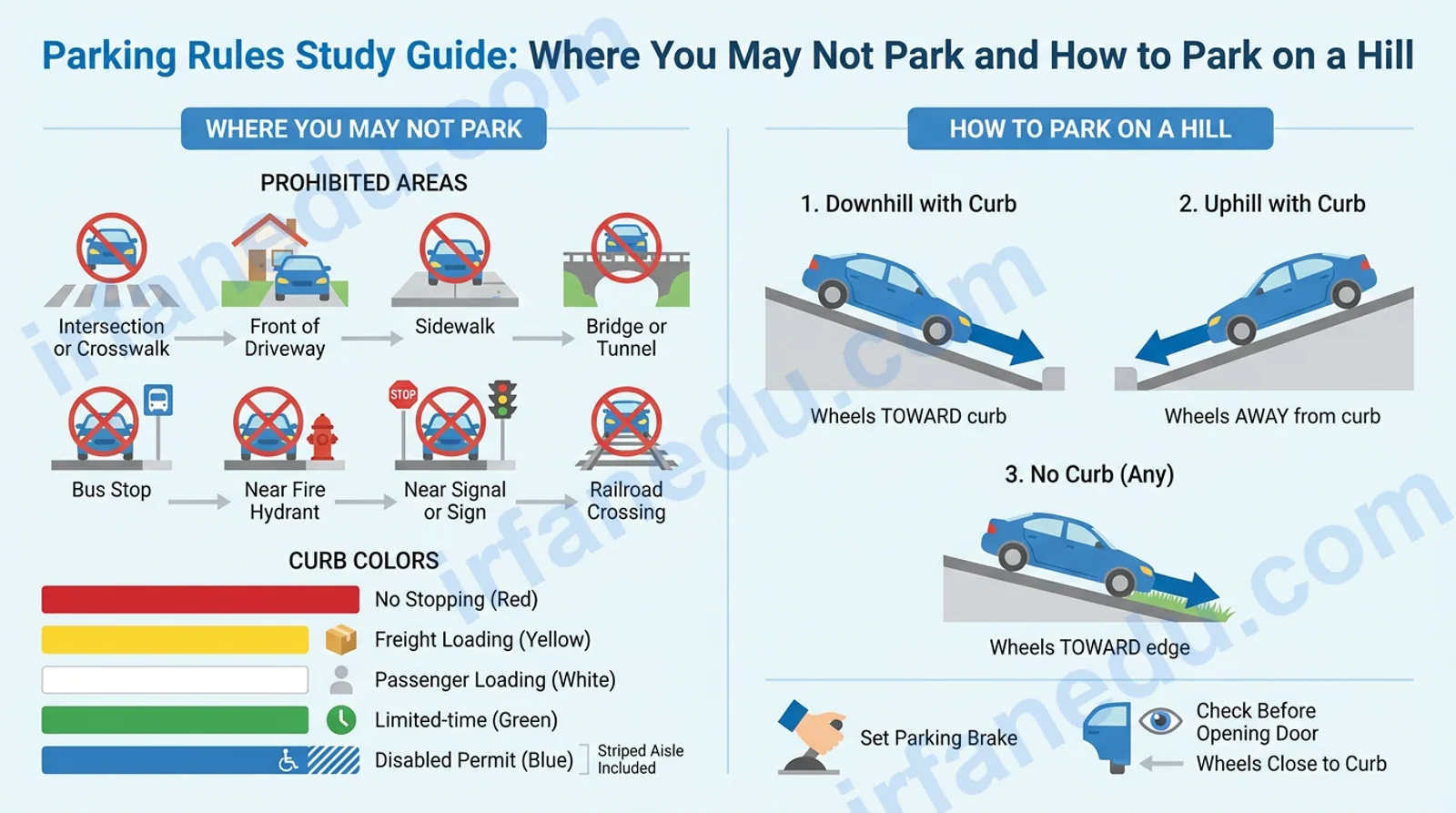
Where You May Not Park
Every prohibition exists because something is hidden or blocked.
The standard clearances
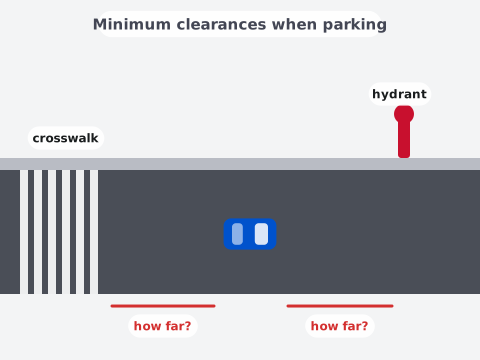
- 15 feet. From a fire hydrant. A few states use 10.
- 20 feet. From a crosswalk at an intersection.
- 30 feet. From a stop sign, yield sign, or traffic signal.
- 50 feet. From a railroad crossing.
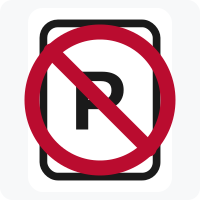
Parking is also prohibited on a sidewalk, within an intersection or crosswalk, in front of a driveway, on a bridge, in a tunnel, and in a bus stop.
Curb colors
- Red. No stopping, standing, or parking at any time.
- Yellow. Loading of freight, for a limited time.
- White. Brief passenger or mail loading only.
- Green. Limited-time parking, as posted.
- Blue. Reserved for vehicles displaying a valid disabled permit.
Parking on Hills
Aim the wheels so a runaway vehicle stops itself.
The three cases
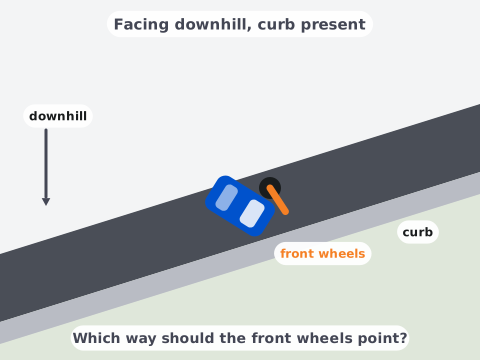
- Downhill with a curb. Turn the wheels toward the curb. If the car rolls, the front tire catches the curb.
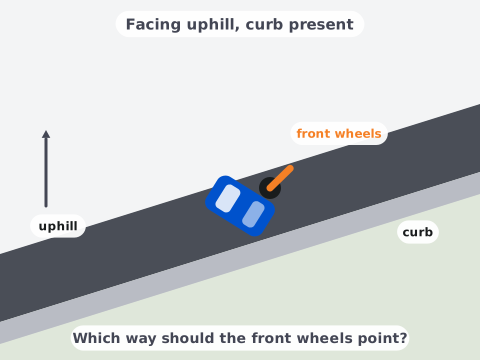
- Uphill with a curb. Turn the wheels away from the curb and roll back a few inches so the tire rests against it.
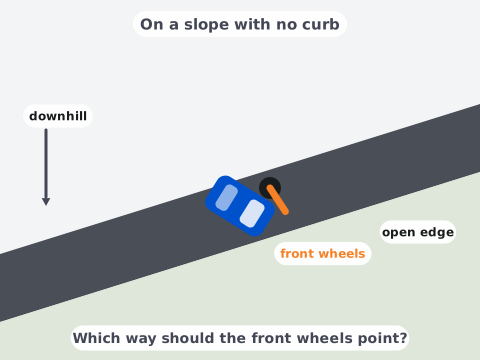
- No curb, either direction. Turn the wheels toward the edge of the road, so a runaway vehicle leaves the roadway instead of entering traffic.
In every case, set the parking brake and leave an automatic transmission in park. A manual should be left in first gear facing uphill and reverse facing downhill.
Finishing the park
After parallel parking, your wheels should be within about twelve inches of the curb. Before opening your door, check the mirror and glance back for traffic and cyclists.
The situations, drawn
The same rules as a picture, which is how they turn up on the test.
Check yourself
18 questions on what you have just read. Tap an option to see whether you were right.
You must not park within how many feet of a fire hydrant in most states?
Show the answer
Correct answer: C. 15 feet
Fifteen feet is the common clearance so a fire crew can reach the hydrant and run hose without moving your vehicle. A few states use ten feet, so check your own handbook, but fifteen is the safe assumption.
Parking is prohibited:
Show the answer
Correct answer: B. On a bridge, in a tunnel, on a sidewalk, or in front of a driveway
Standard prohibitions cover bridges, tunnels, sidewalks, crosswalks, intersections, driveways, bus stops, and railroad crossings. All of them either block someone or hide a hazard from other drivers.
A curb painted red generally means:
Show the answer
Correct answer: A. No stopping, standing, or parking at any time
Red curbs prohibit stopping entirely. In the common color scheme, yellow is a loading zone, white is for brief passenger pick-up and drop-off, green is limited-time parking, and blue is reserved for disabled permit holders.
A blue curb or a blue-marked space is reserved for:
Show the answer
Correct answer: C. Vehicles displaying a valid disabled parking permit or plate
Blue marks accessible parking. Using such a space without a valid permit, or blocking the hatched access aisle beside it, brings heavy fines in every state because it can strand a wheelchair user.
You may not park within how many feet of a railroad crossing in most states?
Show the answer
Correct answer: C. 50 feet
Fifty feet is the common figure. Parking closer blocks the sight line other drivers need to check for an approaching train, and a train overhangs the rails by several feet on each side.
You may not stop or park within how many feet of a stop sign or a crosswalk at an intersection in many states?
Show the answer
Correct answer: D. 20 to 30 feet, depending on the state
Twenty feet from a crosswalk and thirty feet from a stop sign or signal are typical figures. The clearance keeps the sign visible and stops a parked vehicle from hiding a pedestrian stepping off the curb.
When parking facing downhill next to a curb, you should turn your front wheels:
Show the answer
Correct answer: A. Toward the curb
Facing downhill, turn the wheels toward the curb so that if the vehicle rolls, the front tire catches the curb instead of rolling into traffic. Set the parking brake and leave the transmission in park, or in reverse for a manual.
When parking facing uphill with a curb, you should turn your front wheels:
Show the answer
Correct answer: A. Away from the curb, so the vehicle rolls back against it
Facing uphill, turn the wheels away from the curb and let the vehicle roll back a few inches until the rear of the front tire rests against it. The curb then blocks any further movement.
When parking on a hill where there is no curb, you should turn your front wheels:
Show the answer
Correct answer: A. Toward the edge of the road, so the vehicle would roll off the roadway
With no curb to catch the tire, aim the wheels so a runaway vehicle leaves the roadway rather than rolling into traffic. This applies whether you are facing uphill or downhill.
How far from the curb should your wheels be when you finish parallel parking?
Show the answer
Correct answer: D. Within about 12 inches
Most states require the wheels within twelve inches of the curb, and some allow eighteen. Parking further out narrows the lane for passing traffic and is a common reason to fail the road test.
Before leaving your parked vehicle, you should always:
Show the answer
Correct answer: D. Set the parking brake, put the transmission in park, remove the key, and lock the vehicle
Leaving a vehicle running and unattended is illegal in many states and invites theft. Parking brake plus park, or first or reverse gear in a manual, keeps the vehicle where you left it.
You are parking on a slight downhill with a curb, in a car with a manual transmission. You should:
Show the answer
Correct answer: A. Turn the wheels toward the curb, set the parking brake, and leave it in reverse
Downhill means wheels toward the curb so the tire catches if it rolls. Reverse gear opposes the direction gravity would push the car, adding a second line of defense to the parking brake.
You find a space, but parking there would leave your vehicle within a few feet of a crosswalk. You should:
Show the answer
Correct answer: A. Find another space, because parking near a crosswalk hides pedestrians from turning drivers
The clearance around crosswalks exists so a driver turning in can see someone stepping off the curb. A parked car in that space is exactly what causes those collisions.
When leaving a parallel parking space, you should:
Show the answer
Correct answer: A. Signal, check mirrors and blind spot, and edge out only when there is a genuine gap
You are entering moving traffic from a stop, so every other road user has priority. Cyclists in particular travel close to the parked line and are easy to miss without a shoulder check.
Angle parking spaces in a lot are marked at roughly 45 degrees. When leaving one you should:
Show the answer
Correct answer: B. Reverse slowly, checking both ways, because your view of the lane is blocked by neighbouring vehicles
Large vehicles either side hide the lane until your rear is already in it. Reverse slowly enough to stop the moment a pedestrian or vehicle appears.
You are parking in a lot and a space is marked with diagonal stripes beside an accessible space. That striped area is:
Show the answer
Correct answer: D. The access aisle for a wheelchair ramp, and blocking it carries the same penalty as taking the space
The hatched aisle is where a ramp or lift deploys. Parking in it, even partly, can leave someone unable to get back into their own vehicle.
Double parking, meaning stopping alongside a vehicle already parked at the curb, is:
Show the answer
Correct answer: B. Prohibited, because it blocks a traffic lane and hides the parked vehicle
Hazard lights do not make an illegal stop legal. Double parking forces traffic to swerve into the oncoming lane and traps the parked driver. Find a legal space or a designated loading zone.
When parking on a two-way street, your vehicle must be:
Show the answer
Correct answer: B. Parked in the direction of travel for that side of the road
Parking against the flow means you had to cross oncoming traffic to get there and must do so again to leave. It is prohibited on two-way streets in nearly every state.
Answer key
Every answer in one place, in question order.
| No. | Ans | The correct option |
|---|---|---|
| 1 | C | 15 feet |
| 2 | B | On a bridge, in a tunnel, on a sidewalk, or in front of a driveway |
| 3 | A | No stopping, standing, or parking at any time |
| 4 | C | Vehicles displaying a valid disabled parking permit or plate |
| 5 | C | 50 feet |
| 6 | D | 20 to 30 feet, depending on the state |
| 7 | A | Toward the curb |
| 8 | A | Away from the curb, so the vehicle rolls back against it |
| 9 | A | Toward the edge of the road, so the vehicle would roll off the roadway |
| 10 | D | Within about 12 inches |
| 11 | D | Set the parking brake, put the transmission in park, remove the key, and lock the vehicle |
| 12 | A | Turn the wheels toward the curb, set the parking brake, and leave it in reverse |
| 13 | A | Find another space, because parking near a crosswalk hides pedestrians from turning drivers |
| 14 | A | Signal, check mirrors and blind spot, and edge out only when there is a genuine gap |
| 15 | B | Reverse slowly, checking both ways, because your view of the lane is blocked by neighbouring vehicles |
| 16 | D | The access aisle for a wheelchair ramp, and blocking it carries the same penalty as taking the space |
| 17 | B | Prohibited, because it blocks a traffic lane and hides the parked vehicle |
| 18 | B | Parked in the direction of travel for that side of the road |
More permit test practice
Everything on this site tagged DMV lives in the DMV category.
Sources