
Road Situations Practice Test With Diagrams
What is in this test
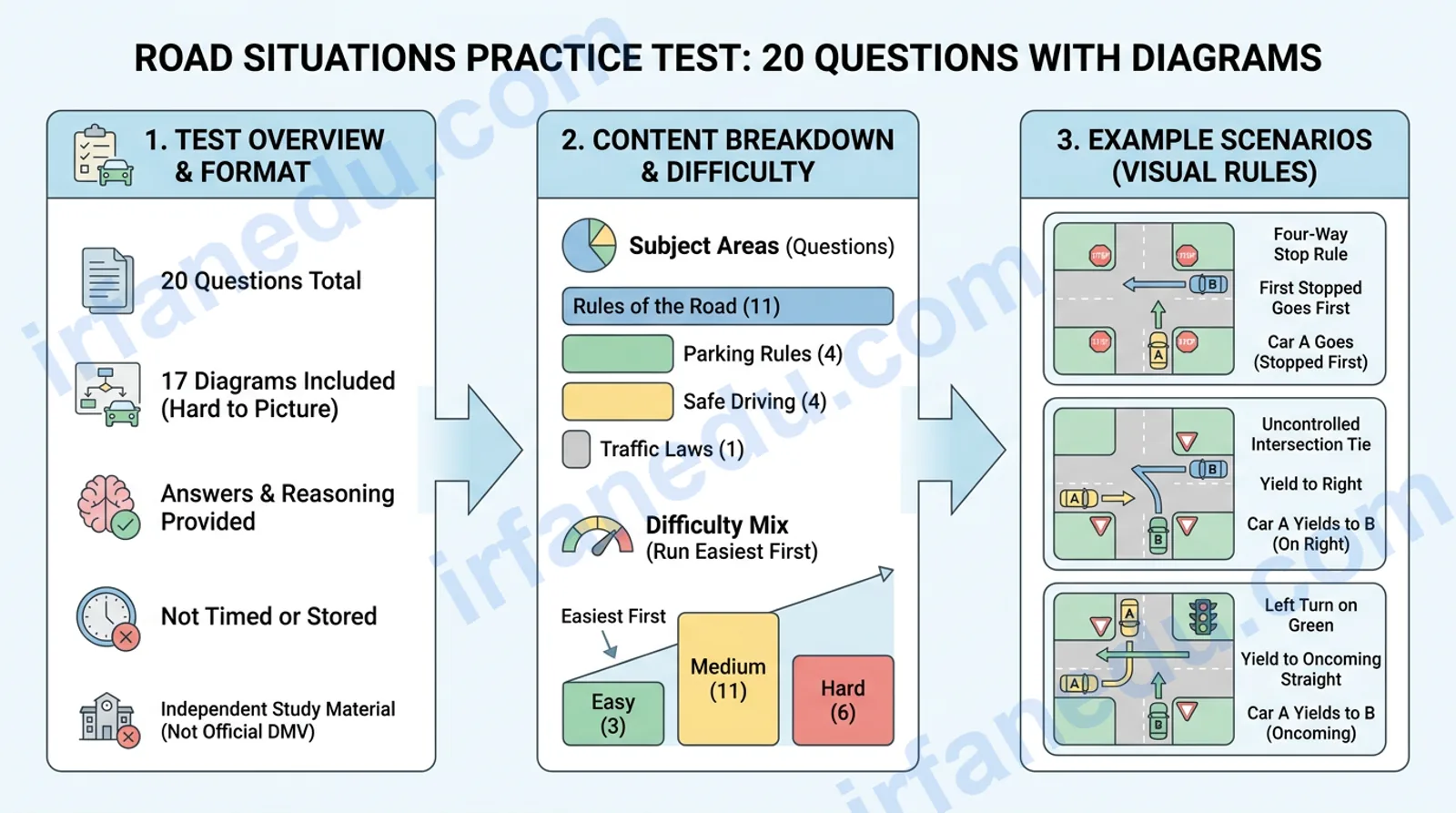
Tap an option and the page marks it and opens the explanation. Nothing is timed and nothing is stored, so you can work through it in one sitting or come back to it. If you would rather not tap through, every answer is also listed in the answer key at the bottom.
| Subject | Questions |
|---|---|
| Rules of the road | 11 |
| Parking rules | 4 |
| Safe driving | 4 |
| Traffic laws | 1 |
Difficulty mix: 3 easy, 11 medium, 6 hard. The questions run easiest first.
The 20 questions
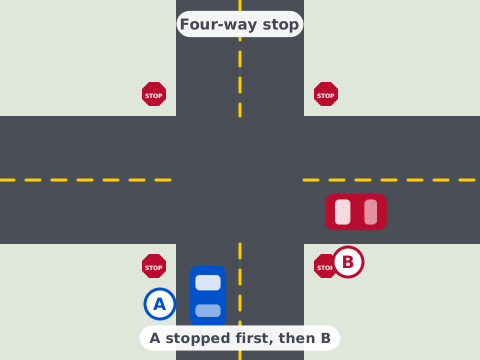
At this four-way stop, car A stopped first and car B stopped second. Who should go first?
Show the answer
Correct answer: D. Car A, because it stopped first
At a four-way stop the order of arrival decides the order of departure. The yield-to-the-right rule only settles a tie, and here there is no tie: A stopped first, so A goes first.
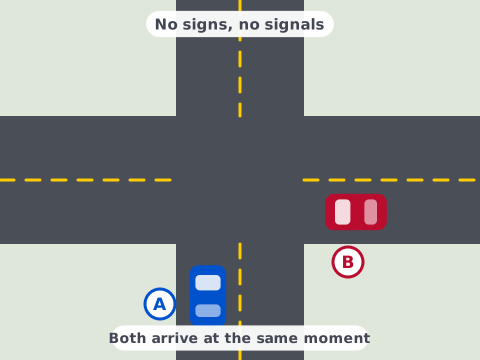
Cars A and B reach this uncontrolled intersection at exactly the same moment. Who must yield?
Show the answer
Correct answer: A. Car A must yield to car B, which is on its right
With no signs or signals and a genuine tie, the driver on the left yields to the driver on the right. B is to A’s right, so A waits. Make eye contact before moving, because the other driver may not know the rule.
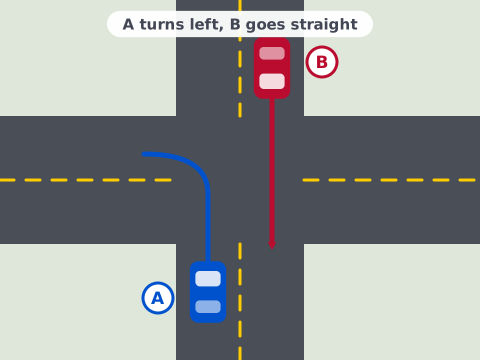
Car A is turning left and car B is coming straight through on a green light. What must A do?
Show the answer
Correct answer: D. Yield to B and turn only when there is a safe gap
A left-turning driver always yields to oncoming traffic going straight. A green light permits the turn but grants no priority. Wait with the wheels straight, so a rear-end hit does not push you into oncoming traffic.
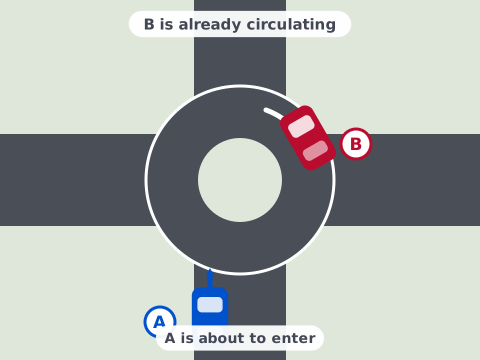
Car A is approaching this roundabout while car B is already circulating. What should A do?
Show the answer
Correct answer: B. Yield to B and enter when there is a safe gap
Traffic already in the circle has the right-of-way. Slow on approach, look to your left, and enter in a gap. US roundabouts run counterclockwise, and you should never stop once you are inside one.
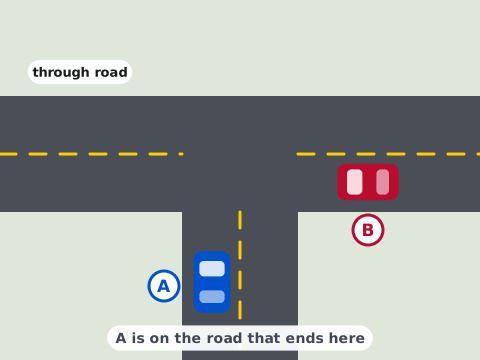
Car A is on the road that ends at this T-intersection, and car B is on the through road. Who yields?
Show the answer
Correct answer: D. Car A, because its road ends at the intersection
Traffic on a terminating road yields to traffic on the through road unless signs or signals say otherwise. A must wait for a gap in both directions before entering.
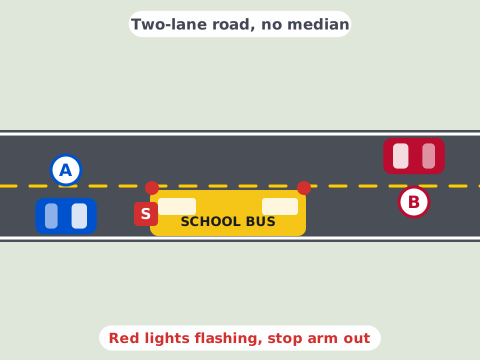
This school bus has stopped on a two-lane road with red lights flashing and the stop arm out. Which drivers must stop?
Show the answer
Correct answer: C. Both car A and car B
On an undivided road, traffic in both directions must stop and stay stopped until the lights go off and the arm folds in. Children may cross in front of the bus where neither driver can see them.
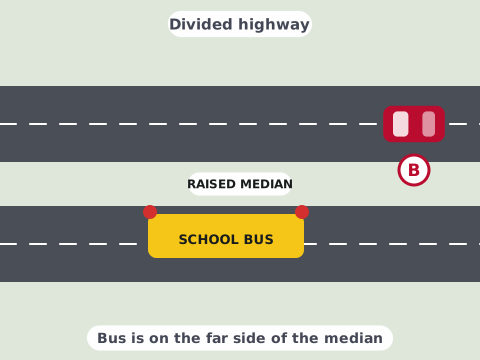
The school bus is stopped on the far side of a raised median. In most states, what must car B do?
Show the answer
Correct answer: B. Continue with care, because a physical median separates the roadways
Most states exempt drivers separated from the bus by a raised median or barrier. A painted line is not a divider, so on an undivided road you would still have to stop. New York requires the stop either way, so check your own state rule.
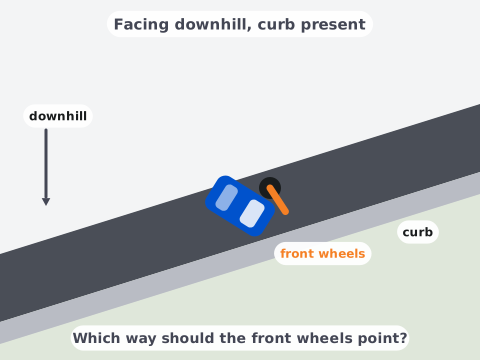
This car is parked facing downhill next to a curb. Which way should the front wheels point?
Show the answer
Correct answer: C. Toward the curb
Facing downhill, turn the wheels toward the curb so a rolling car catches on it instead of drifting into traffic. Set the parking brake and leave an automatic in park, or a manual in reverse.
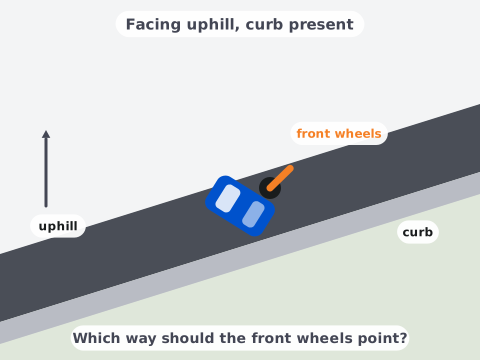
This car is parked facing uphill next to a curb. Which way should the front wheels point?
Show the answer
Correct answer: B. Away from the curb, so the car rolls back against it
Facing uphill, turn the wheels away from the curb and let the car roll back a few inches until the tire rests against it. The curb then blocks any further movement.
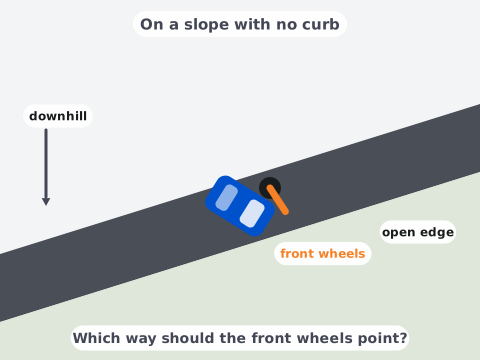
There is no curb on this slope. Which way should the front wheels point?
Show the answer
Correct answer: A. Toward the edge of the road, so a rolling car leaves the roadway
With nothing to catch the tire, aim the wheels so a runaway car heads off the road rather than into traffic. This applies whether you are facing uphill or downhill.
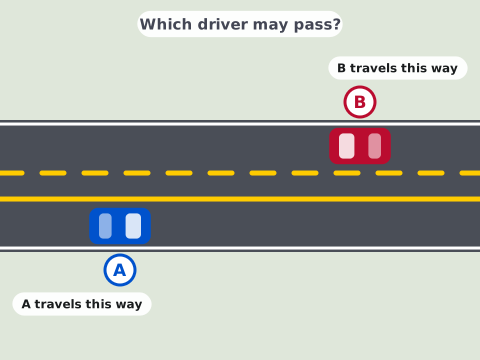
Looking at the center line markings, which driver is allowed to pass?
Show the answer
Correct answer: A. Car B, because the line on its side is broken
The line on your own side of the center governs your permission. B has a broken line and may cross to pass when the way is clear. A has a solid line, meaning its sight distance is inadequate, so A may not pass.
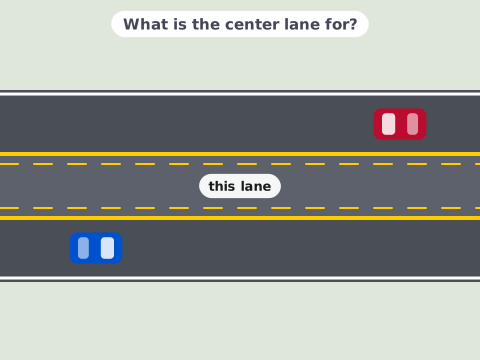
The center lane here is bounded by a solid yellow line outside and a broken yellow line inside, on both sides. What is it for?
Show the answer
Correct answer: A. Left turns from either direction, but not for travelling along
This is a two-way left-turn lane. Drivers from both directions share it to prepare for a left turn, so travelling along it risks a head-on meeting. Enter it only shortly before your turn.
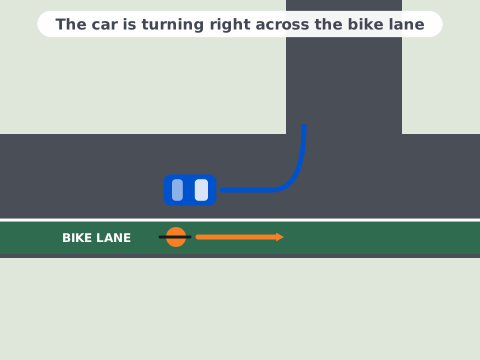
This car is about to turn right across a bike lane with a cyclist alongside. What should the driver do?
Show the answer
Correct answer: C. Yield to the cyclist, and where the law allows, merge into the bike lane before turning
This is the right hook, one of the most common bicycle collisions. Check the mirror and blind spot, let the cyclist clear, and where merging into the bike lane before the corner is permitted, do it: that removes the crossing conflict entirely.
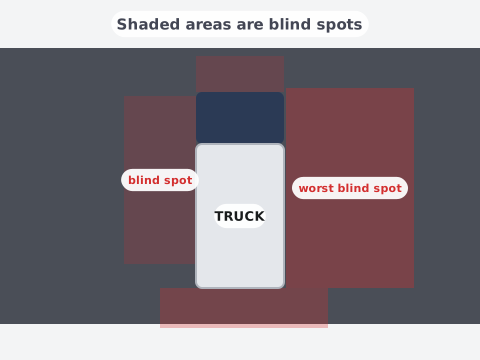
The shaded areas around this truck are its blind spots. Which one is the largest and most dangerous?
Show the answer
Correct answer: D. Along the right side of the trailer
The right-side no-zone runs most of the trailer length and is the worst of the four. A useful rule: if you cannot see the driver’s face in the truck’s mirror, they cannot see you.
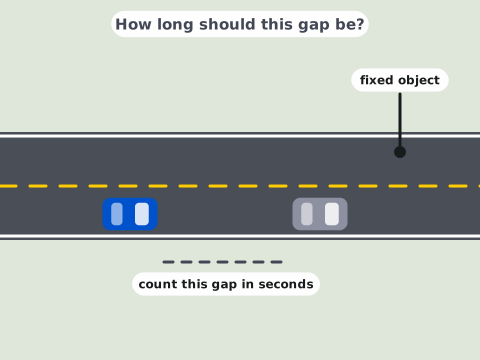
Using a fixed object beside the road to measure the gap, how many seconds should this following distance be in good conditions?
Show the answer
Correct answer: B. At least three seconds
When the vehicle ahead passes a fixed object, count until you reach it. Three seconds is the minimum in good conditions, and you should add a second for each adverse factor such as rain, night, or following a large vehicle.
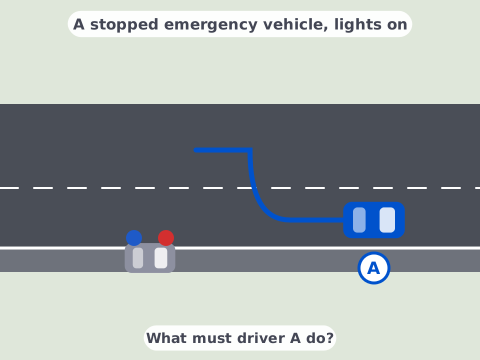
Car A is approaching a stopped emergency vehicle with its lights flashing on the shoulder. What does the Move Over law require?
Show the answer
Correct answer: B. Change lanes away from the stopped vehicle, or slow down if changing lanes is not safe
Vacate the lane next to the stopped vehicle when you safely can. If traffic makes that impossible, slow well below the posted limit as you pass. The law covers police, fire, EMS, tow trucks, and highway maintenance crews.
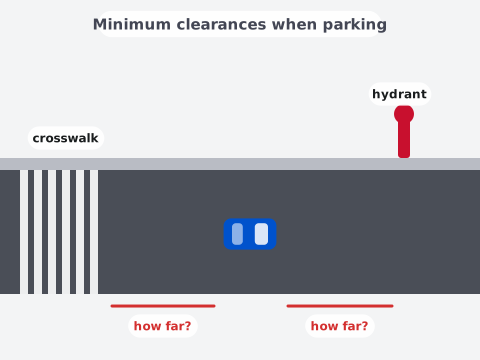
Looking at this street, what are the usual minimum clearances from a crosswalk and from a fire hydrant?
Show the answer
Correct answer: A. 20 feet from the crosswalk and 15 feet from the hydrant
Twenty feet from a crosswalk and fifteen from a hydrant are the common figures. The crosswalk clearance keeps pedestrians visible to turning drivers, and the hydrant clearance lets a fire crew reach it and run hose.
At this four-way stop, suppose A and B had instead stopped at exactly the same instant. Who would go first?
Show the answer
Correct answer: C. Car B, because it is to the right of car A
A genuine tie is broken by the yield-to-the-right rule, so B would go first. Order of arrival always takes precedence; the right-hand rule exists only for when arrival order cannot separate the drivers.
It starts raining heavily in the scene shown. How should the following gap change?
Show the answer
Correct answer: C. It should increase to at least four to five seconds
Wet pavement lengthens braking distance and rain shortens how far ahead you can see, so add at least one second per adverse factor. Traction is worst in the first minutes of rain, before the oil film washes away.
In the roundabout shown, which direction does traffic travel and which lane does A use to exit?
Show the answer
Correct answer: D. Counterclockwise, exiting from the outer lane
US roundabouts run counterclockwise. Stay in the outside lane if you are leaving at the first or second exit, signal right as you approach your exit, and yield to pedestrians in the crosswalk on the way out.
Answer key
Every answer in one place, in question order.
| No. | Ans | The correct option |
|---|---|---|
| 1 | D | Car A, because it stopped first |
| 2 | A | Car A must yield to car B, which is on its right |
| 3 | D | Yield to B and turn only when there is a safe gap |
| 4 | B | Yield to B and enter when there is a safe gap |
| 5 | D | Car A, because its road ends at the intersection |
| 6 | C | Both car A and car B |
| 7 | B | Continue with care, because a physical median separates the roadways |
| 8 | C | Toward the curb |
| 9 | B | Away from the curb, so the car rolls back against it |
| 10 | A | Toward the edge of the road, so a rolling car leaves the roadway |
| 11 | A | Car B, because the line on its side is broken |
| 12 | A | Left turns from either direction, but not for travelling along |
| 13 | C | Yield to the cyclist, and where the law allows, merge into the bike lane before turning |
| 14 | D | Along the right side of the trailer |
| 15 | B | At least three seconds |
| 16 | B | Change lanes away from the stopped vehicle, or slow down if changing lanes is not safe |
| 17 | A | 20 feet from the crosswalk and 15 feet from the hydrant |
| 18 | C | Car B, because it is to the right of car A |
| 19 | C | It should increase to at least four to five seconds |
| 20 | D | Counterclockwise, exiting from the outer lane |
More permit test practice
Everything on this site tagged DMV lives in the DMV category.
Sources